Round Diamond vs Emerald Cut: Which Should You Buy in 2026?
TL;DR: Round Diamond vs Emerald Cut — Key Differences
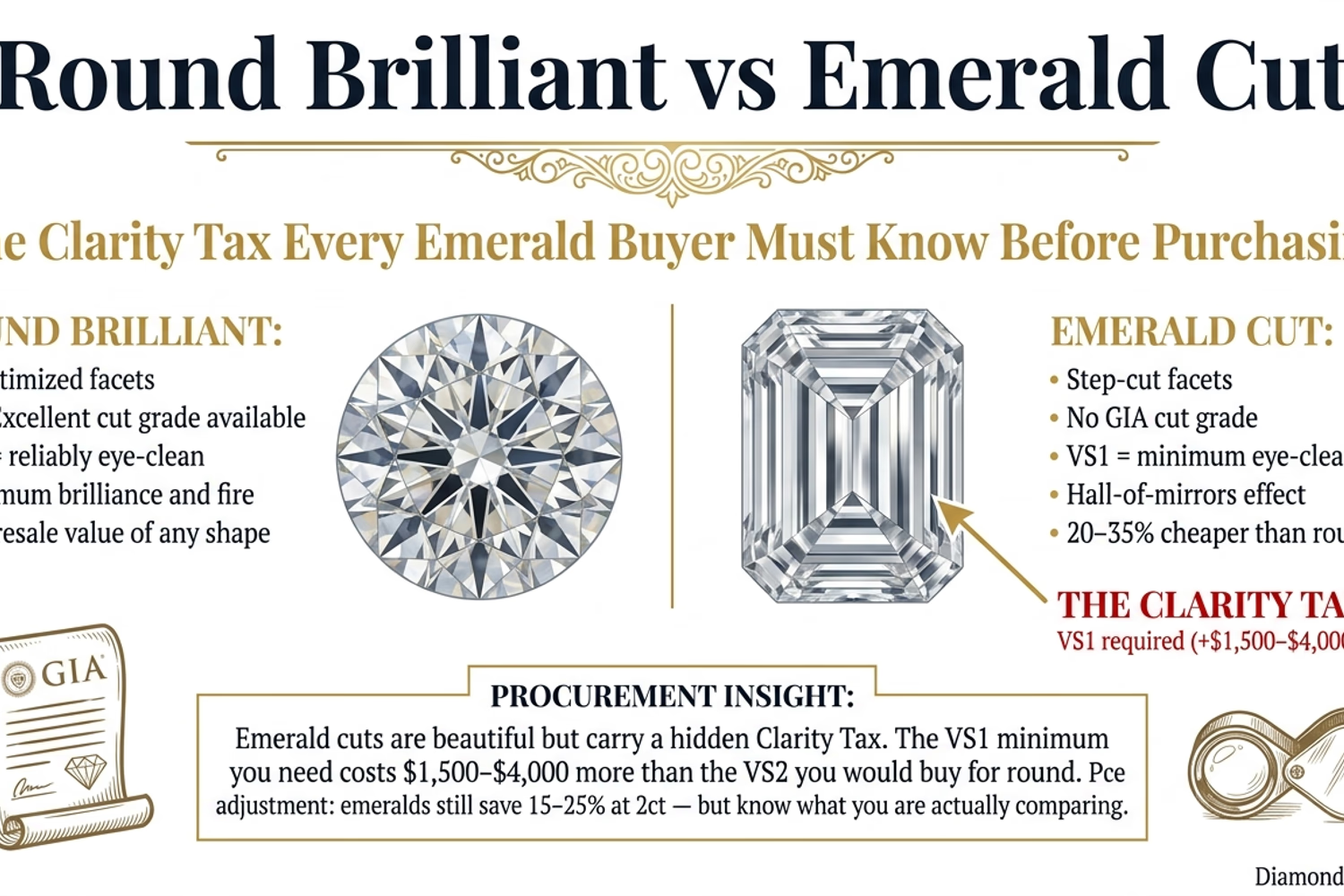
- Sparkle: Round brilliant produces intense, fragmented white sparkle. Emerald cut produces elegant "hall of mirrors" long reflections — not inferior, just different
- The Clarity Tax: Emerald cuts need VS1 minimum to look eye-clean; round needs only VS2. This single grade gap costs $1,500–$4,000 depending on size
- Color: Emerald cuts show body color more — F color minimum in white gold vs G for round
- Price at 2ct: Round G-VS2 GIA Excellent at $16,490 vs emerald G-VS1 at ~$11,000–$13,000 — saving $3,500–$5,500 with larger face-up appearance
- Cut grade: GIA grades round brilliants (Excellent/VG/Good). Emerald cuts get no GIA cut grade — you evaluate manually
- Buy round for sparkle and simplicity. Buy emerald for elegant size and the hall-of-mirrors look — but budget for VS1, not VS2
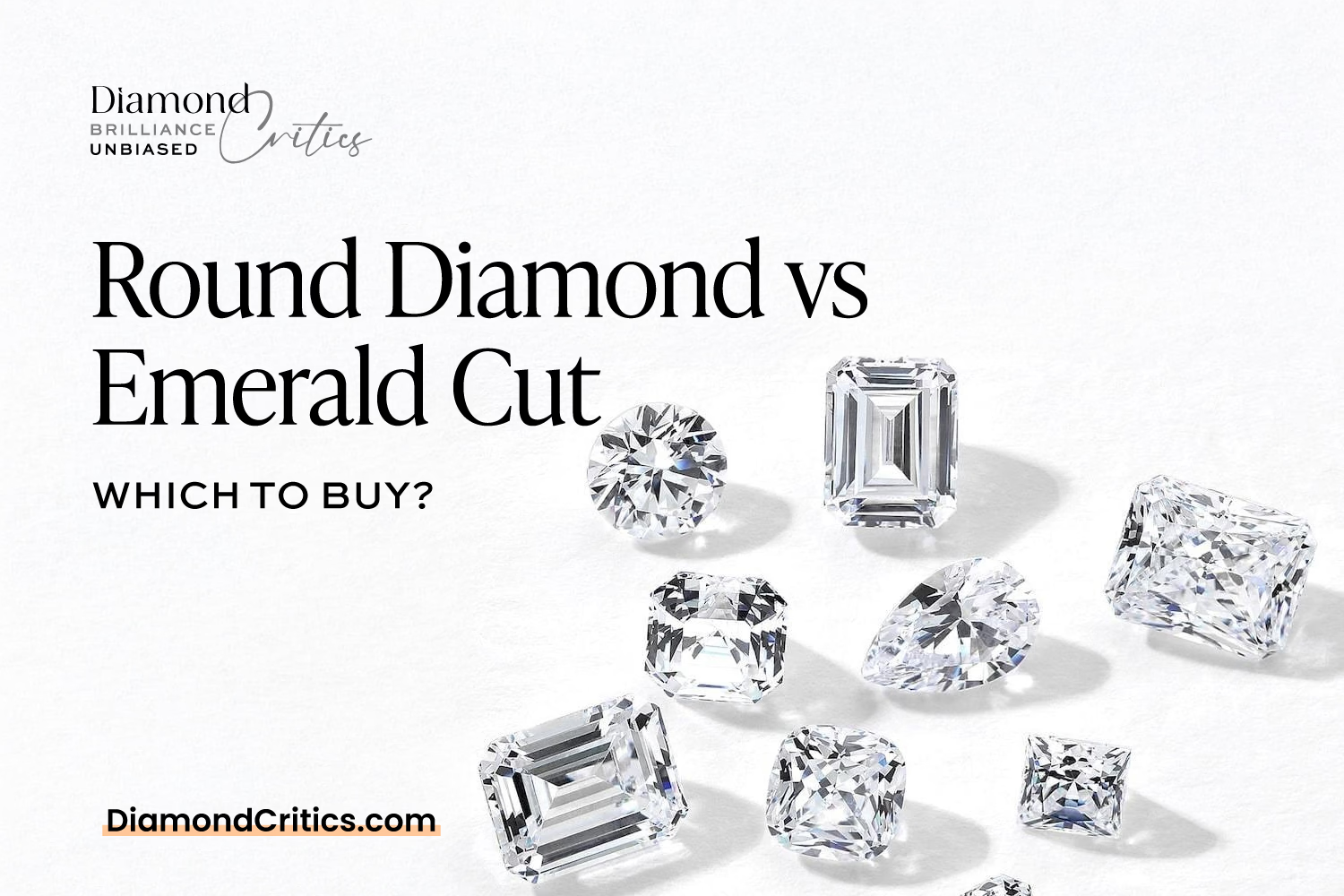
Round brilliant and emerald cut are the two most technically opposite diamond shapes in existence. One is engineered for maximum sparkle through 57 mathematically precise facets. The other is a step-cut rectangle that prioritizes clarity and elegance over light return. The problem for buyers: these two shapes look radically different, have completely different clarity requirements, and price in ways that are not intuitive.
This guide gives you the full comparison — and the one critical fact about emerald cut clarity that most buyers discover too late.


Visual Appearance: Sparkle vs Hall of Mirrors
This is not a close comparison.
Round brilliant produces bright, white sparkle (brilliance) and rainbow flashes (fire) through 57 precisely angled facets. The pattern is symmetrical, high-contrast, and intense. In virtually any lighting condition — office fluorescents, dinner candlelight, outdoor sun — a round brilliant performs.
Emerald cut produces what gemologists call the "hall of mirrors" effect: long, rectangular reflections that slide and glide as the stone moves. It is architectural, sophisticated, and quiet. In bright light, an emerald cut shows dramatic flashes of black and white contrast. In dim light, it goes noticeably flat.
Neither is objectively superior. But they appeal to fundamentally different aesthetic preferences:
- Round: you want brilliance and sparkle
- Emerald: you want elegance and visible size
If you are unsure which you prefer, watch videos of both in indoor lighting. The emerald's calm, gliding light pattern is immediately distinguishable from the round's intense, fragmented sparkle.
The Clarity Tax: The Most Important Thing Emerald Buyers Miss
This is the concept that changes the emerald cut price comparison entirely.
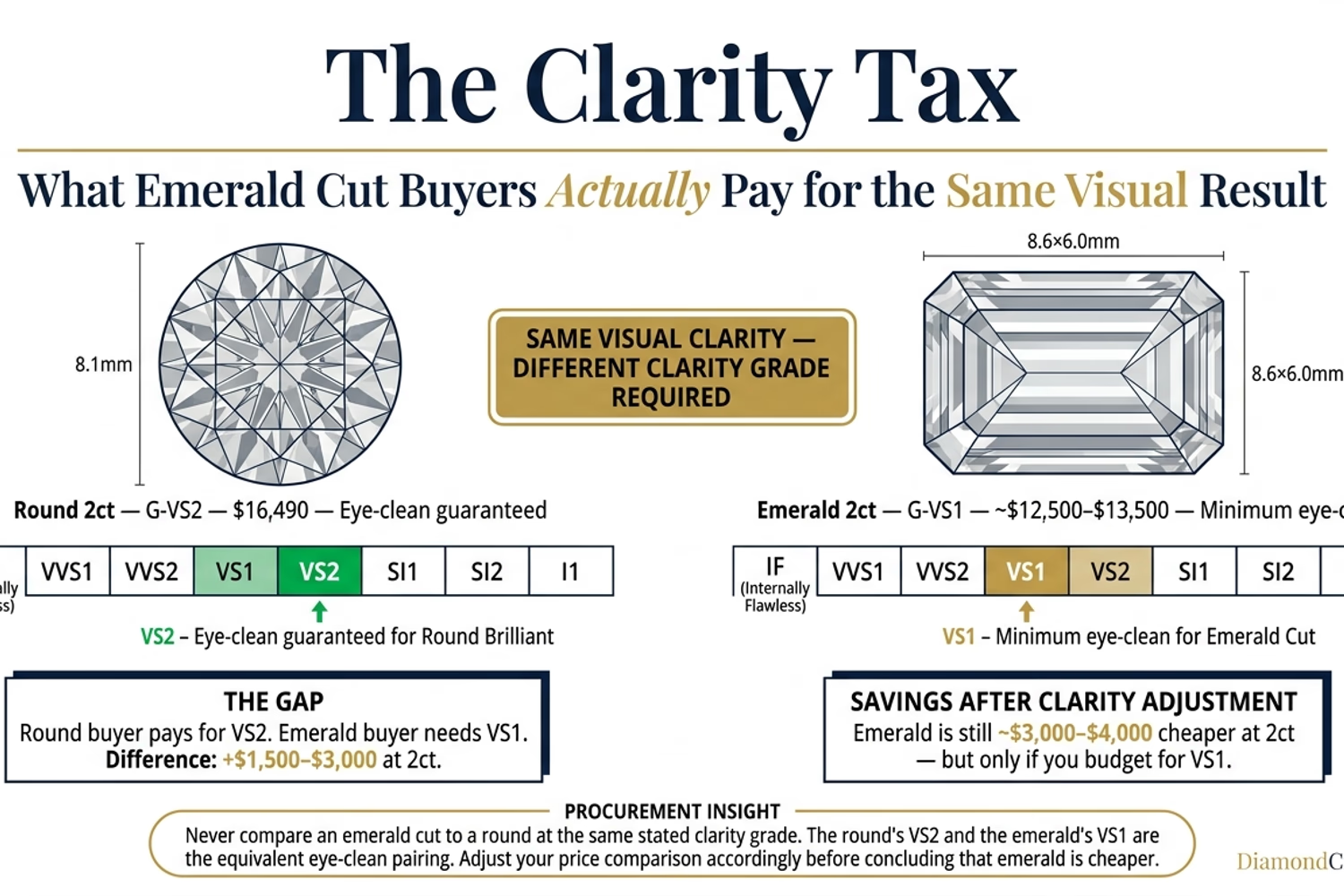
The Clarity Tax is the extra money emerald cut buyers pay to achieve the same visual clarity as a round diamond buyer at a lower grade.
Round brilliants hide inclusions brilliantly. The 57 facets scatter light chaotically, masking internal features that would be obvious in a step-cut. A round at VS2 is reliably eye-clean — you cannot see inclusions with the naked eye.
Emerald cuts have large, open table facets that act like windows into the stone. Inclusions that are invisible in a round are clearly visible in an emerald of the same clarity grade. As a result:
- Round: VS2 is eye-clean (reliable, confirmed)
- Emerald: VS1 is typically the minimum eye-clean grade, and some VS1 emeralds still show inclusions
This single clarity-grade difference costs $1,500–$4,000 at typical buying sizes, depending on carat weight.
1ct example — actual eye-clean minimum:
| Shape | Minimum eye-clean clarity | Typical price |
|---|---|---|
| Round GIA Excellent | VS2 | $3,230 |
| Emerald (no cut grade) | VS1 | ~$2,600 |
The emerald still costs less — the clarity tax does not eliminate the emerald's price advantage. But buyers who plan an emerald at VS2 to "save money" and end up disappointed by visible inclusions have paid the clarity tax unknowingly.
Price Comparison: Round vs Emerald Cut
Emerald cuts are generally 20–35% less expensive than round diamonds of the same carat weight and stated quality grades. The reasons: less rough diamond waste in cutting, lower global demand relative to round, and no GIA cut grade benchmark to compete against.
2ct Natural Comparison (adjusted for actual visual equivalent):
| Shape | Grade | Price | Note |
|---|---|---|---|
| Round GIA Excellent 2ct | G-VS2 | $16,490 | Eye-clean guaranteed |
| Round GIA Excellent 2ct | F-VS2 | $18,140 | One color step up |
| Round GIA Excellent 2ct | E-VVS2 | $22,460 | Colorless + VVS territory |
| Round GIA Excellent 2ct | D-VS2 | $26,490 | D color — $10,000 premium vs G |
| Emerald cut 2ct | G-VS1 | ~$11,000–$13,000 | Minimum eye-clean grade |
| Emerald cut 2ct | G-VVS2 | ~$14,000–$15,500 | Certified eye-clean territory |
At 2ct, even with the clarity adjustment, emerald cuts save $1,500–$5,500 vs an equivalent round. The savings are real — the key is knowing to budget for VS1 or VVS2, not VS2.
See our full 2 carat round diamond price guide for a complete price breakdown by grade.
The GIA Cut Grade Problem
Round diamonds receive a GIA cut grade. GIA Excellent is the top grade — based on a comprehensive mathematical model of 57 proportion measurements. When you buy GIA Excellent, you have independent confirmation of light performance quality.
Emerald cuts do not receive a GIA cut grade. GIA grades emerald cut certificates for polish, symmetry, color, and clarity — but not cut quality as a holistic score. You are evaluating the emerald's proportions manually: table % (60–68% ideal), depth % (60–66% ideal), L/W ratio (1.40–1.55 for classic emerald look).
This means emerald cut buyers carry more evaluation burden. You need HD video and ideally in-person viewing to judge whether a specific emerald cut's proportions produce attractive light performance.
For round diamonds, buying GIA Excellent removes this ambiguity completely. See our GIA certified round diamond guide for what to look for on the certificate.
Face-Up Size: Does Emerald Look Bigger?
Yes — but with important caveats.
Emerald cuts have a larger surface area per carat than round brilliants because emerald cuts are shallower (less depth) and spread more of the carat weight across the face. A 1ct emerald typically measures 6.8mm × 4.8mm vs 6.4mm × 6.4mm for a round — the emerald's elongated face covers more visual area despite identical weight.
| Carat | Round Diameter | Emerald L × W | Visual advantage |
|---|---|---|---|
| 1ct | 6.4mm × 6.4mm | ~6.8 × 4.8mm | Emerald: longer |
| 2ct | 8.1mm × 8.1mm | ~8.6 × 6.0mm | Emerald: noticeably larger |
| 3ct | 9.4mm × 9.4mm | ~9.9 × 6.8mm | Emerald: significant |
The elongated shape of an emerald cut also creates a finger-elongating effect that many buyers find flattering — the rectangular outline visually lengthens the finger in a way no round can match.
Durability: Round Wins
Round diamonds have no corners, edges, or points — the circular outline is the most chip-resistant shape available. The curved edge distributes impact stress evenly around the stone.
Emerald cuts have four corners. While the corners are typically faceted (not sharp like a princess cut), they are still more vulnerable to impact than a round's smooth curve. Under normal everyday wear, emerald cuts are durable — but they require a protective prong or bezel setting at each corner to guard against chips.
For active lifestyles or buyers concerned about durability, round diamonds are the safer choice.
Tides Of Summer Capsule
Up To 30% Off
Shop The Sale →Vault ClearanceClear The Vault
Up To 70% Off
Shop Vault Deals →Affiliate link — no extra cost to you
Color in Emerald vs Round
Emerald cuts show body color more readily than round brilliants because the large table facet reflects the stone's body color without the chaotic light scattering that rounds use to mask tint.
- Round: G is the practical minimum in white gold or platinum
- Emerald: F is the safer minimum in white gold or platinum; at 2ct+, consider E
This creates another cost premium for emerald buyers who want a "colorless" look in a white metal setting: F or E color in an emerald versus G in a round costs an additional $800–$3,000 depending on size.
Lab-Grown: Both Shapes Benefit Equally
Lab-grown round diamonds at 2ct start at $2,810 (IGI D-VVS1 Excellent). Lab-grown emerald cuts at 2ct are typically $2,000–$2,800 — the shape price gap narrows in lab-grown because rough efficiency advantages matter less when total prices are already dramatically compressed.
For lab-grown buyers, the choice between round and emerald is purely aesthetic — the financial difference is minimal. See our lab grown round diamond guide for the complete analysis.
Who Should Buy a Round Diamond?
Buy round if:
- Sparkle and light performance are the primary attraction
- You want a guaranteed GIA Excellent cut grade with no judgment calls
- Durability matters (no corners)
- You plan to resell — round has the most liquid secondary market
- Budget is under $5,000 for a natural stone (the size advantage of emerald matters more at larger sizes)
Who Should Buy an Emerald Cut Diamond?
Buy emerald cut if:
- You prefer elegance and the hall-of-mirrors effect over sparkle
- A longer, rectangular shape appeals aesthetically
- Budget is $10,000+ and you want more face-up size than a same-priced round
- You understand and budget for VS1 minimum clarity
- A finger-elongating effect is desirable in the setting
Farzana's Verdict: Round vs emerald is the clearest aesthetic fork in diamond buying — these two shapes look so different that most buyers feel an immediate preference when they see them side by side. The technical case for round is strong: GIA cut grade, better hiding of inclusions, maximum sparkle. The case for emerald: more visual stone for the money at 2ct+, a sophisticated look that photographs exceptionally, and a distinctive identity. The Clarity Tax is the one trap I warn every emerald buyer about before they purchase — do not buy an emerald at VS2 expecting it to look like a round at VS2. Budget for VS1 minimum, or buy VVS2 if you want certainty. That extra $1,500–$3,000 at 2ct is not optional.
Frequently Asked Questions
Is an emerald cut or round diamond more expensive?
Round diamonds cost 20–35% more than emerald cuts at comparable stated grades. However, emerald cuts require higher clarity (VS1 minimum vs VS2 for round) to achieve the same visual quality, which narrows the gap by $1,500–$4,000 depending on size.
Which sparkles more, round or emerald cut?
Round brilliant sparkles more — significantly. The 57-facet arrangement produces maximum brilliance and fire. Emerald cuts produce the "hall of mirrors" effect: long, elegant reflections rather than intense sparkle.
What clarity grade do I need for an emerald cut diamond?
VS1 is the reliable minimum eye-clean grade for emerald cuts. Some VS1 emeralds still show inclusions, so video review is essential. VVS2 guarantees a clean look. VS2 is acceptable only in rounds, not emerald cuts.
Does an emerald cut look bigger than a round diamond?
Yes, typically. An emerald cut has a larger face-up area per carat because its shallower profile spreads weight across the surface. A 1ct emerald measures about 6.8×4.8mm vs 6.4mm round — the elongated shape looks larger and covers more finger.
Does emerald cut hide inclusions well?
No. The opposite is true. The emerald cut's large, open table facets act as windows into the stone, making inclusions significantly more visible than in a round brilliant. This is why emerald cuts require VS1 vs the round's VS2 for eye-clean appearance.
What is the best color for an emerald cut in white gold?
F color minimum for an emerald cut in white gold or platinum. G is the round diamond standard, but emerald cuts show body color more readily through the large table facet. At 2ct+, E color is safer in white metal settings.
Does an emerald cut have a GIA cut grade?
No. GIA only issues cut grades for round brilliant diamonds. Emerald cut certificates show polish, symmetry, color, and clarity grades, but no holistic cut quality score. You evaluate an emerald cut's proportions manually using table %, depth %, and L/W ratio.
What L/W ratio should I look for in an emerald cut?
1.40–1.55 is the classic emerald cut range. Ratios under 1.30 produce a nearly square "Asscher-like" look. Ratios above 1.60 become very elongated and narrow. Most buyers prefer 1.40–1.50.
Is an emerald cut good for everyday wear?
Yes, with appropriate setting. The four corners of an emerald cut are vulnerable to chipping if exposed. A setting with corner prongs or a partial bezel at the corners protects the stone adequately for everyday wear.
Which cut is better for an engagement ring, round or emerald?
Both make excellent engagement rings. Round offers certified light performance and durability. Emerald offers a distinctive, sophisticated look with more face-up size per dollar. The choice is aesthetic — look at both shapes on a hand before deciding.
Does an emerald cut look good in a solitaire setting?
Yes — a four-prong or six-prong solitaire with corner prongs shows off the emerald's elegant rectangular outline. The shape's clean lines suit minimalist settings particularly well. Emeralds also look spectacular in three-stone settings where the side stones frame the elongated center.
What is the price difference between 1ct round and 1ct emerald?
A 1ct G-VS2 GIA Excellent round costs $3,230 vs approximately $2,200–$2,600 for a comparable emerald cut. Adjusting for the clarity requirement (VS1 for emerald), the gap narrows to $400–$800 at 1ct.
Is an emerald cut or round better in yellow gold?
In yellow gold, both shapes are better with H or I color. The warm metal compensates for body color in either shape. Emerald cuts benefit more from yellow gold because the warm reflection fills the large table facet, making lower color grades look more attractive than in white metal.
Should I buy a lab-grown emerald cut or round?
For lab-grown, the shape price gap is minimal — choose purely on aesthetic preference. Both shapes in lab-grown at 2ct run $2,000–$3,000. Buy the shape you love more, since cost is no longer a meaningful differentiator.
See Also
Expert Verdict
Always audit the stone individually — no grade replaces seeing the actual diamond. The certificate tells you what to look for. Your eyes tell you whether to buy.
— Farzana Hasan, GIA Expert · DiamondCritics.com