Round Diamond vs Cushion Cut: A Side-by-Side Buying Guide for 2026
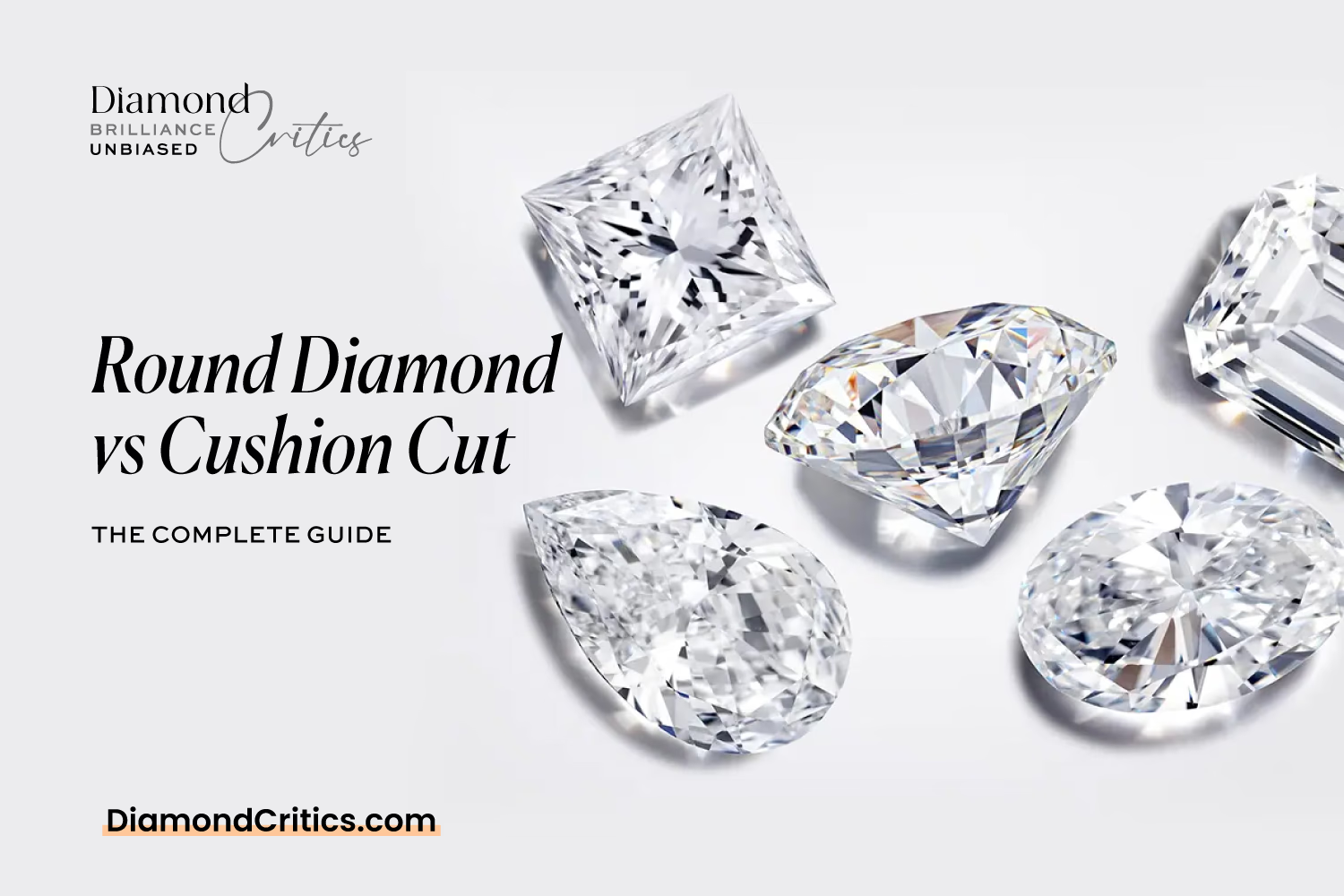
The round brilliant and the cushion cut are the two most purchased diamond shapes in the world, and they could not look more different when you put them side by side. One is mathematical precision — 57 identical facets engineered for maximum light return. The other is romantic softness — a pillow shape with chunky facets that produce a distinctive glowing fire.
Both are genuinely beautiful. Neither is objectively better. But one is almost certainly a better fit for your specific preferences, budget, and lifestyle. This guide breaks down exactly where they differ — and where the right answer lies.
Visual Appearance: Brilliance vs Glow
The most fundamental difference between round and cushion is the character of their light performance.
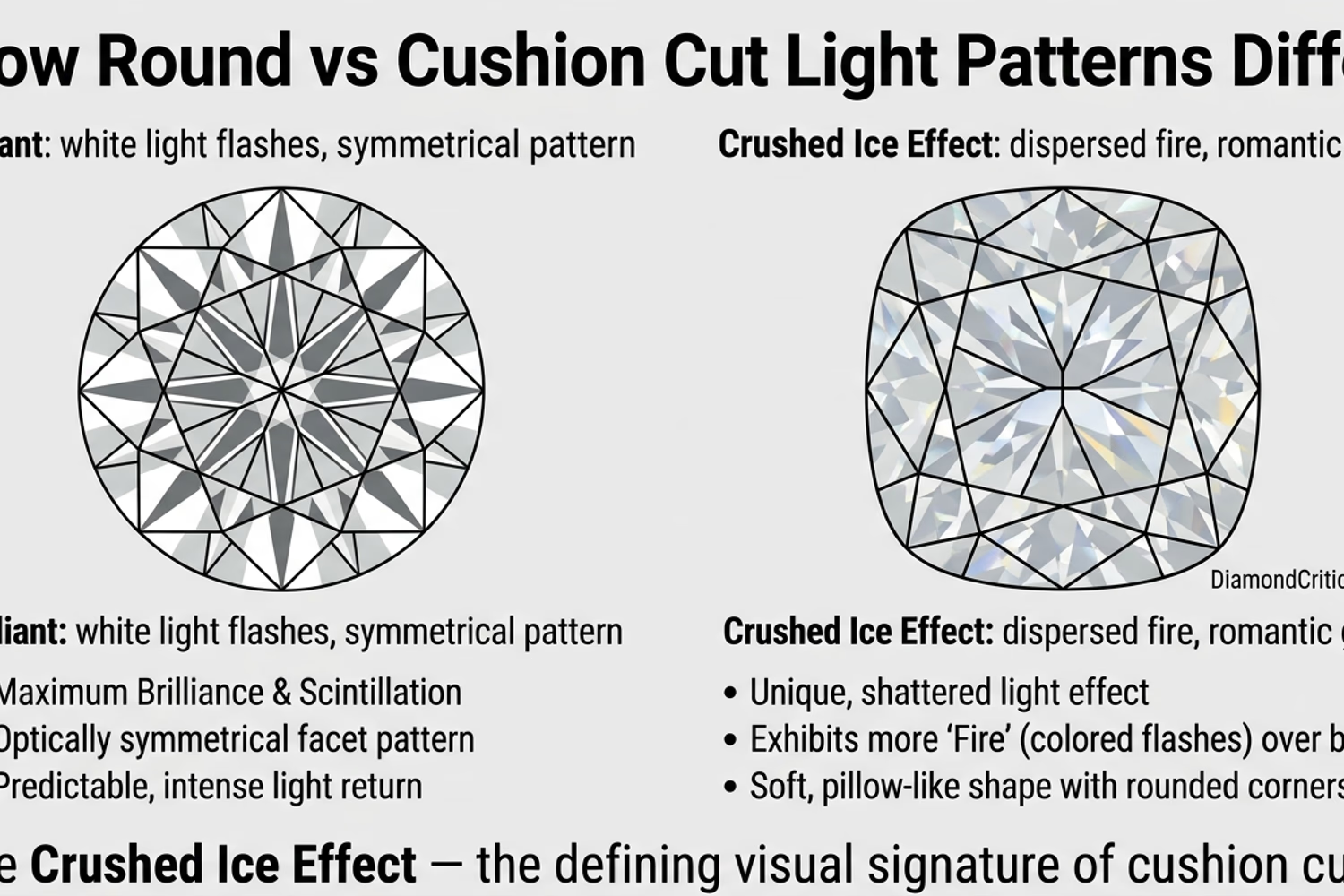
Round brilliant: produces bright, white flashes of light called brilliance, alongside dispersed rainbow flashes called fire. The pattern is symmetrical, predictable, and maximally intense. You see distinct, high-contrast sparkle.
Cushion cut: produces a warmer, softer light pattern. Classic cushion cuts have larger, chunkier facets that create dramatic fire (rainbow colors) rather than white brilliance. Modified cushion cuts (called "crushed ice" cushions) have a shattered, brilliant-like pattern that mimics round brilliance more closely.
The Crushed Ice Effect
This is the most important term to know when shopping for cushion cuts. A "crushed ice" cushion cut has tiny, fragmented facets that produce a splintered, brilliant look — almost like looking through frosted glass. Some buyers love the vintage, dreamy quality. Others find it visually confusing compared to a round's crisp, defined sparkle.
When you search cushion cuts on Blue Nile, you will encounter both cushion brilliant (classic large facets, more fire) and cushion modified (crushed ice, more brilliance). Neither is standardly graded by GIA for cut quality — which is a critical difference from round diamonds.


The Cut Grade Difference: Round Has One, Cushion Does Not
This is the single most important technical difference between the two shapes.
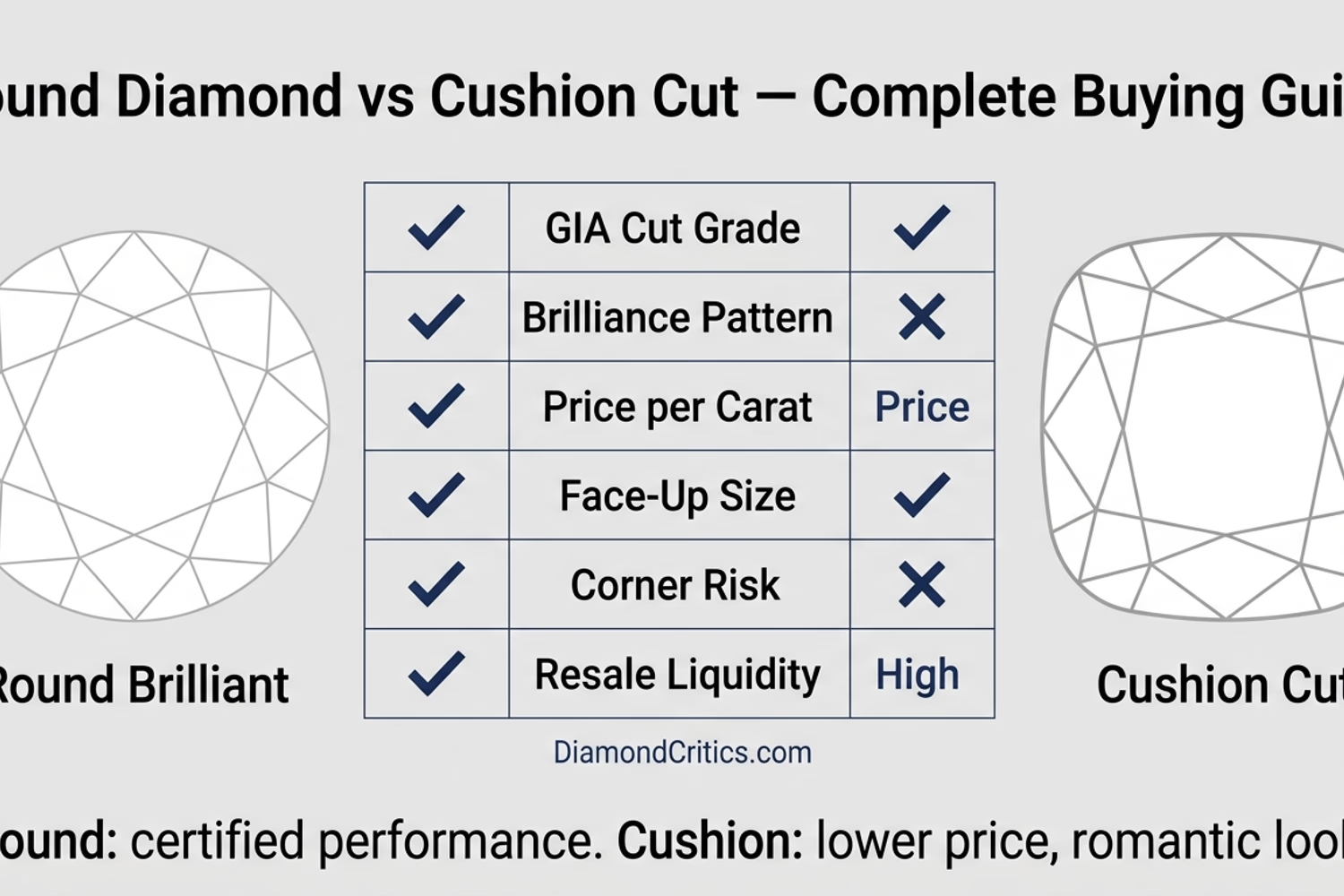
Round diamonds receive a GIA cut grade: Excellent, Very Good, Good, Fair, or Poor. This grade is based on a comprehensive mathematical model of 57 proportion measurements and their interaction with light. When you buy a GIA Excellent round diamond, you have independent confirmation that the stone's proportions are optimized for maximum light performance.
Cushion diamonds do not receive a GIA cut grade. GIA issues grades only for round brilliants. A cushion cut certificate shows table %, depth %, polish, and symmetry — but no holistic cut grade. You are evaluating the cushion's cut quality entirely on your own using these individual measurements.
This creates a real risk for cushion buyers: a cushion with beautiful certificate numbers can still have poor light performance because the cushion's facet arrangement is not governed by the same mathematical models as round cuts.
For round diamonds, buying GIA Excellent is simple and definitive. For cushions, you need to rely on HD videos and often jeweler expertise to judge cut quality. See our round diamond ideal proportions guide for what to look for in round diamond certificates.
Price Comparison: Round vs Cushion Cut
Cushion cuts are generally 15–35% cheaper than round diamonds of comparable carat weight and quality grades. The primary reason: rough diamond yield. A round brilliant requires removing more rough material to achieve the precise 57-facet geometry. Cushion cuts retain more of the rough crystal and are more efficient to cut.
1 Carat Comparison (G color, VS2 clarity):
| Shape | Price | Stone |
|---|---|---|
| Round GIA Excellent | $3,230 | View Stone |
| Round GIA Excellent | $3,240 | View Stone |
| Cushion (equivalent) | ~$2,100–$2,600 | Typical range |
The savings are real — typically $600–$1,100 per carat at 1ct, scaling to $5,000–$10,000 at 2ct. The trade-off: no independent cut grade, different light character, and a choice that some people love and others don't.
2 Carat Comparison: A GIA 2ct G-VS1 Excellent Round is priced at $22,460. A comparable cushion cut at 2ct G-VS2 typically runs $14,000–$17,000 — a $5,000–$8,000 gap that is meaningful at this price level.
See our full 2 carat round diamond price guide for complete round diamond pricing at every grade.
Face-Up Size: Who Looks Bigger?
Cushion cuts often appear larger face-up for the same carat weight, because they have a less deep proportional profile than rounds. Cushion cuts also tend to be slightly wider and longer, spreading more of the carat weight across the face.
However, this is not universal. Some cushion cuts have very deep proportions (>70% depth) that hide carat weight — these look small for their weight and should be avoided. Always check the face-up dimensions:
| Carat | Round Diameter | Cushion Length × Width |
|---|---|---|
| 1ct | 6.4mm | Typically 5.8×5.8mm to 6.2×6.2mm |
| 1.5ct | 7.3mm | Typically 6.5×6.5mm to 7.0×7.0mm |
| 2ct | 8.1mm | Typically 7.2×7.2mm to 7.8×7.8mm |
A well-proportioned cushion at 2ct may measure 7.5×7.5mm — giving slightly less face-up area than a round at 8.1mm diameter, not more. The edge-to-edge advantage of a cushion is smaller than often claimed.
Use our round diamond size chart to compare face-up areas at every carat weight.
Length-to-Width Ratio: Square vs Rectangular Cushion
Round diamonds are always perfectly circular. Cushion cuts come in a range of shapes from perfectly square (1:1 ratio) to elongated rectangle (1.15–1.20+):
- Square cushion (ratio 1.00–1.05): looks most like a round from a distance; classic, balanced
- Slightly elongated cushion (1.05–1.10): small finger-elongating effect; most popular range
- Elongated cushion (1.15–1.20+): closer to an emerald cut; unusual look, niche preference
Most buyers prefer the 1.00–1.10 range. If you want a round, buy a round. If you want a clearly rectangular stone, look at emerald or radiant cuts. The cushion's sweet spot is slightly square.
Prong Settings: Both Shapes, Different Risks
Round diamonds sit in 4-prong or 6-prong settings and have no vulnerable corners — the circular outline has no points or edges to chip. This is a durability advantage.
Cushion cuts also have no sharp corners, unlike princess or marquise cuts. This makes cushions relatively durable. However, the square/rectangular outline means the corners (though rounded) receive more stress than the smooth curve of a round diamond.
For both shapes, a 4-prong setting works well. Cushions in a halo setting look particularly striking — the round halo of small diamonds surrounding the square stone creates a classic vintage aesthetic that is one of the cushion's signature looks.
See our round diamond engagement ring settings guide for detailed setting guidance that applies to cushions as well.
Color and Clarity for Cushion vs Round
Color: Cushion cuts hold color slightly more than round brilliants because their larger facets reflect more body color. For a round, G is the practical minimum in white gold. For a cushion in white gold, F–G is a safer choice, especially at 2ct+.
Clarity: Both shapes at VS2 are eye-clean. Cushion cuts are marginally better at hiding inclusions because the fragmented facet pattern of modified cushions scatters light more chaotically, masking minor inclusions well. For cushions, VS2 or even a carefully selected SI1 with video review is appropriate.
Lab-Grown Round vs Lab-Grown Cushion
Both shapes benefit equally from the lab-grown price revolution. A 2ct IGI D-VVS1 lab-grown round is $2,810 — extraordinary value for the size and grade. Lab-grown cushion equivalents at 2ct typically run $1,800–$2,400.
The shape price gap narrows significantly in lab-grown because the rough efficiency advantage of cushions matters less when total prices are already dramatically compressed. See our lab grown round diamond guide for more on lab-grown pricing across shapes.
Tides Of Summer Capsule
Up To 30% Off
Shop The Sale →Vault ClearanceClear The Vault
Up To 70% Off
Shop Vault Deals →Affiliate link — no extra cost to you
Who Should Buy a Round Diamond?
Buy a round brilliant if:
- You want maximum, certified light performance with no ambiguity
- You value the GIA Excellent cut grade as an objective quality benchmark
- Brilliance (white sparkle) matters more to you than fire (rainbow sparkle)
- You plan to resell — round diamonds have the most liquid resale market of any shape
- You want a timeless design that will not feel dated in 10 or 20 years
See all our round cut diamond guides for depth on every dimension.
Who Should Buy a Cushion Cut?
Buy a cushion cut if:
- You love the vintage, romantic aesthetic
- Fire (colored light) appeals to you more than pure white brilliance
- Budget savings of 20–30% are meaningful to your overall plan
- You prefer a square shape over a circle
- You are planning a halo setting where the cushion shape shines
Farzana's Verdict: Round vs cushion is genuinely a preference question, not a right-answer question — but I'll give you my framework. If you cannot decide between them, look at the ring on a hand in indoor lighting and outdoor daylight. Round looks commanding and bright in both conditions. Cushion looks more romantic indoors and slightly less brilliant outdoors. The cut grade gap matters: with a round GIA Excellent at $3,230 for a 1ct G-VS2, you have absolute certainty about what you are getting. With a cushion, you are relying on video and judgment without a single-number quality grade. That ambiguity has a value — it's why the price is lower. If you are a detail-oriented buyer who wants verified performance, round. If aesthetics first, cushion.
Frequently Asked Questions
Is a round diamond or cushion cut more expensive?
Round diamonds cost 20–35% more per carat than cushion cuts of comparable quality grades. A 1ct G-VS2 round runs $3,230 on Blue Nile vs approximately $2,100–$2,600 for a comparable cushion.
Which looks bigger, round or cushion cut?
Well-proportioned cushions (depth <65%) can appear slightly larger face-up than rounds of identical carat weight. However, deeply cut cushions (>70% depth) look smaller than rounds of the same weight.
Does a round diamond sparkle more than a cushion cut?
Round brilliants produce more intense white sparkle (brilliance). Cushions produce more fire (colored light). Neither is objectively more sparkle, but round brilliants are consistently rated higher in light return metrics.
Which is better for an engagement ring, round or cushion?
Both are excellent choices. Round offers certified cut quality and maximum brilliance. Cushion offers a romantic aesthetic, lower price, and vintage appeal. The best choice depends on which look you prefer more than any technical factor.
Do cushion cut diamonds hold their value better than round?
No. Round diamonds are the most liquid and consistently valued shape in secondary markets. Cushion cuts sell at a steeper discount to retail than rounds when resold.
What is the cushion cut's most popular length-to-width ratio?
1.00–1.10 — slightly square to minimally elongated. This range is the most purchased and the most universally flattering. Ratios above 1.20 become niche and harder to find or resell.
Can you get a GIA Excellent cut grade on a cushion diamond?
No. GIA issues cut grades only for round brilliant diamonds. Cushion cuts receive GIA polish and symmetry grades (Excellent, Very Good, Good) but no overall cut grade. This is a meaningful difference.
What clarity grade should I buy for a cushion cut?
VS2 or SI1 with video review. Cushion cuts, especially modified "crushed ice" cushions, hide inclusions well. A well-chosen SI1 cushion at VS2 price is excellent value.
Is cushion cut good for everyday wear?
Yes. Cushion cuts have no sharp points or vulnerable corners, making them more durable than princess, pear, or marquise cuts. The rounded corners handle everyday contact well.
How does color look in cushion vs round?
Cushions show color slightly more than rounds because the larger facets reflect body color more directly. In white gold, buy at minimum F–G for cushions where you would buy G for round.
Which setting is best for a cushion cut diamond?
A cushion halo (round melee around the square stone) is the cushion's signature look. Four-prong solitaire also works beautifully. Avoid bezels, which obscure the shape's curved corners.
What is the price difference for 2ct round vs cushion?
A GIA 2ct G-VS1 round at $22,460 vs a comparable cushion at $14,000–$17,000 — a $5,000–$8,000 gap. Meaningful savings for the shape trade-off.
Is a round or cushion diamond better for a halo setting?
Cushion cuts look exceptional in halo settings — the contrast between the square center and the circular halo creates a classic engagement ring aesthetic. Round halo settings are also beautiful but more common. Cushion halo settings feel distinctly different.
Are cushion cut diamonds still popular?
Cushion cuts are the second most purchased diamond shape after round, making up approximately 18–22% of engagement ring diamond sales. They are extremely popular and not going anywhere.
See Also
- Round Cut Diamond Guide
- Round Diamond vs Oval Diamond
- Round Diamond vs Princess Cut
- Round Diamond Color Guide
- Round Diamond Clarity Guide
- Round Diamond Ideal Proportions
- 1 Carat Round Diamond Price
- 2 Carat Round Diamond Price
- Round Diamond Engagement Ring Settings
- Lab Grown Round Diamond Guide
- Diamond 4Cs Guide
Expert Verdict
Always audit the stone individually — no grade replaces seeing the actual diamond. The certificate tells you what to look for. Your eyes tell you whether to buy.
— Farzana Hasan, GIA Expert · DiamondCritics.com