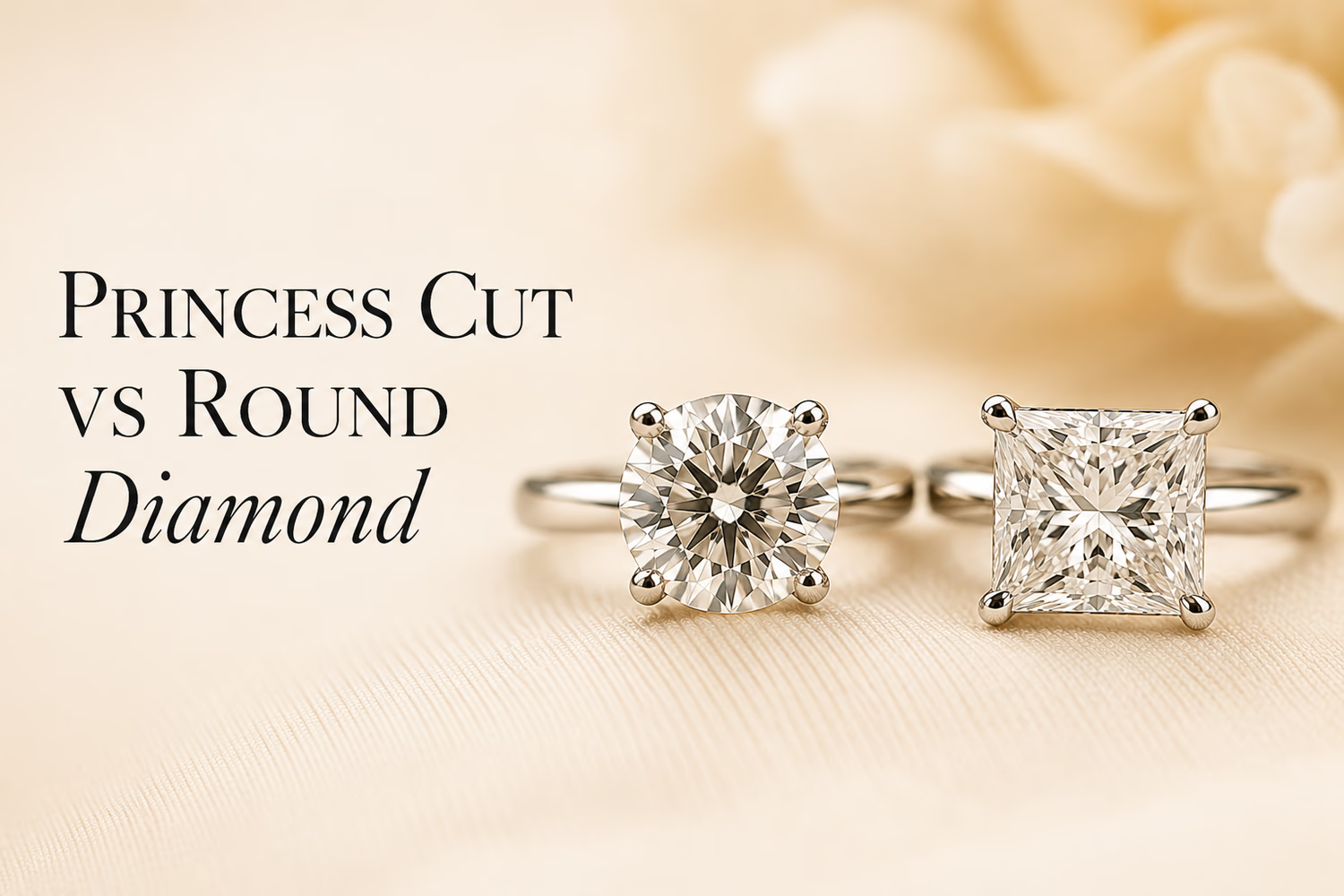
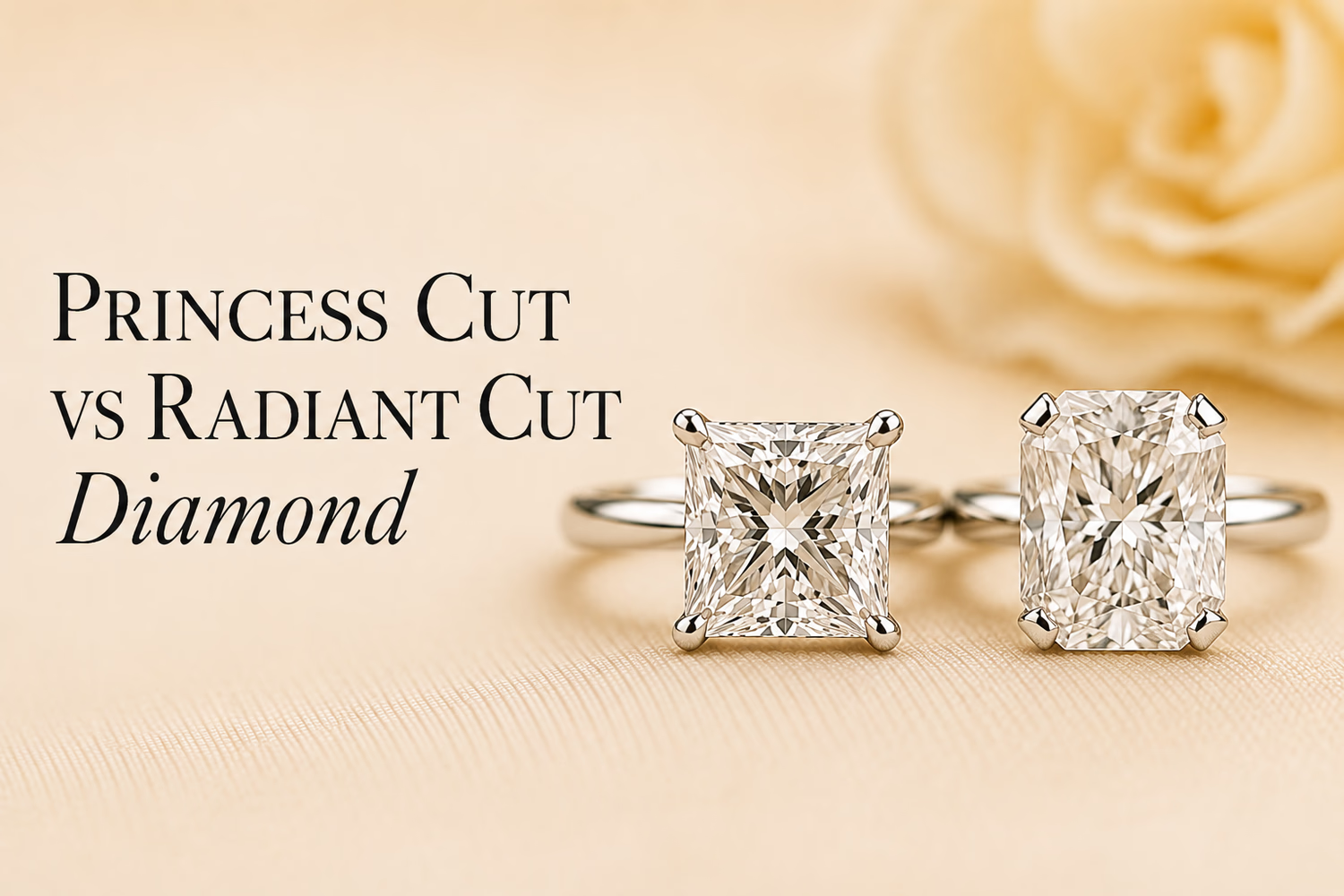
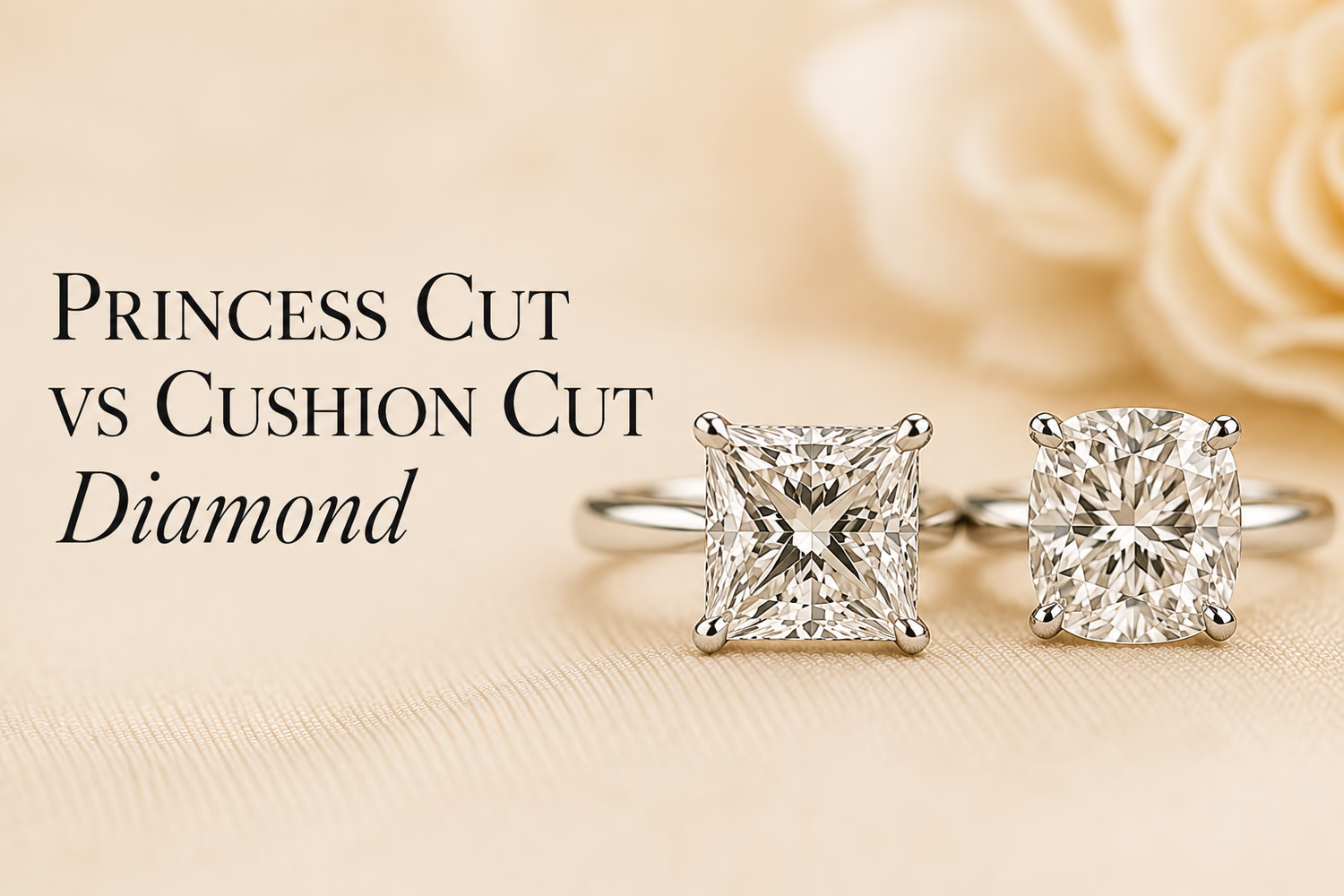
Princess Cut Diamond Size Chart: Face-Up mm Per Carat
A 1 carat princess cut diamond measures approximately 5.5mm × 5.5mm face-up. A 1 carat round brilliant measures 6.4–6.5mm in diameter. Both stones weigh exactly 1 carat. The princess cut looks smaller.
This is The Phantom Carat Effect: princess cut diamonds carry 8–12% more of their total weight below the girdle — in the pavilion and corners — rather than in the face-up table. The result is a stone that weighs a full carat but presents less visual surface area than a round of the same weight. If you're buying a princess cut without accounting for this, you're paying full price for a stone that appears lighter than its certificate says.
This page gives you the complete size chart, the Phantom Carat Effect data, the depth percentage mechanics, and the sub-threshold buying strategy that turns the effect into a budget advantage rather than a trap.
TL;DR — Princess Cut Size Chart
- 1ct princess cut = ~5.5mm × 5.5mm face-up. A 1ct round brilliant is ~6.4mm. The princess cut has approximately 6% less face-up area for the same carat weight.
- The Phantom Carat Effect: princess cuts carry 8–12% more weight in depth. A 1ct princess cut appears visually equivalent to approximately a 0.85–0.90ct round brilliant. You're paying for 1ct; your ring looks like 0.90ct round.
- Depth is the mechanism: a well-proportioned princess cut has a depth percentage of 65–75%. A round brilliant sits at 60–64%. That 5–12% extra depth is weight you're paying for that isn't visible from above.
- L:W ratio affects perceived size: a 1.00 L:W (perfect square) maximises face-up area per carat. A 1.05 L:W looks slightly elongated and can appear larger on the finger in one direction.
- The sub-threshold strategy: a 0.90ct princess cut is only ~0.2mm smaller face-up than a 1.00ct stone — an invisible difference when worn. The price difference is typically 18–22%. The saving is real; the size difference is not.
- See the complete size chart below. Then see the Princess Cut Diamond Ideal Proportions guide for how depth percentage affects light performance as well as apparent size.
The Complete Princess Cut Diamond Size Chart
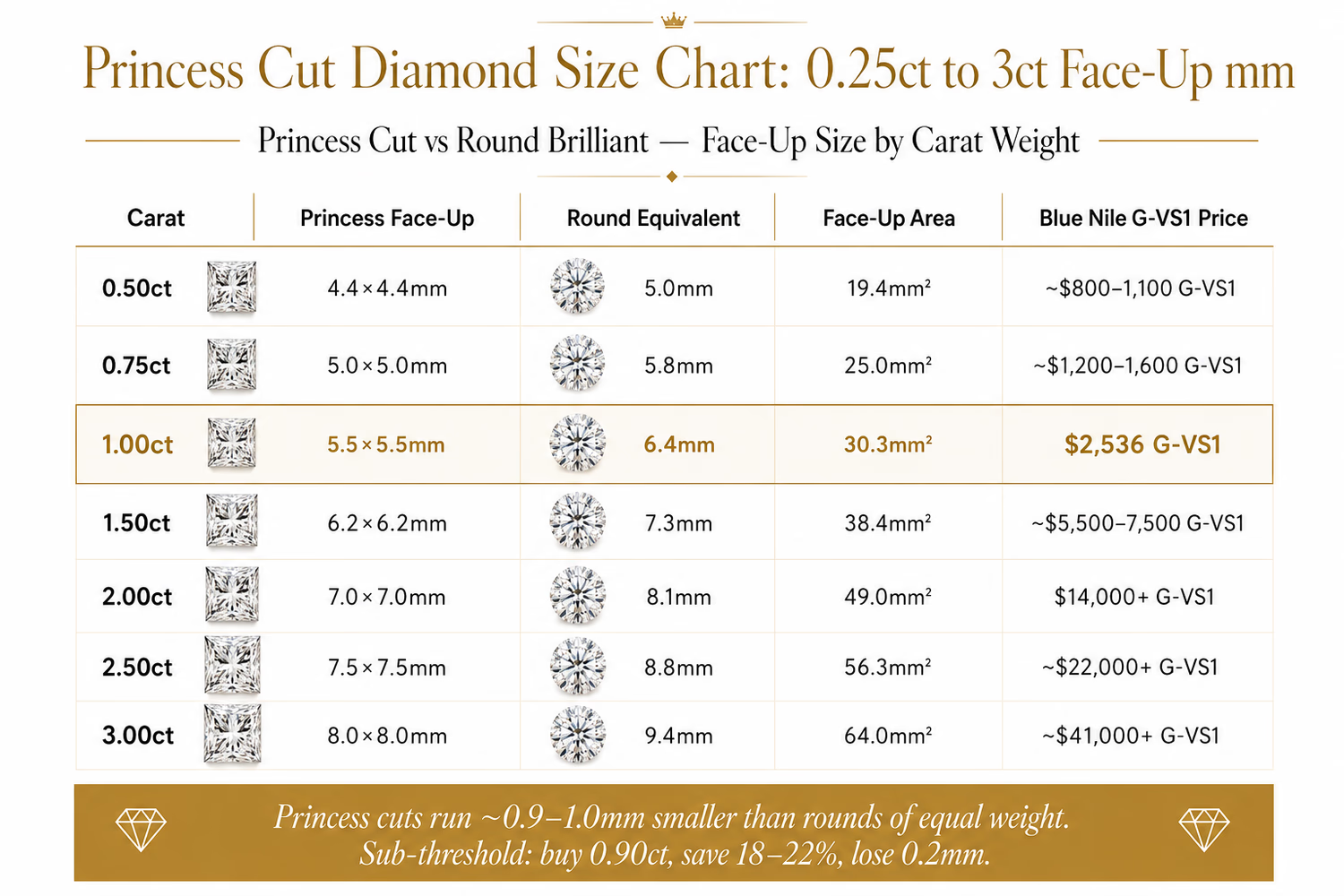
| Carat | Princess Face-Up | Round Equivalent | Face-Up Area | Depth (typical) | Blue Nile G-VS1 Ideal |
|---|---|---|---|---|---|
| 0.25 ct | ~3.4 × 3.4mm | ~4.1mm round | ~11.6mm² | 65–72% | ~$400–$600 |
| 0.50 ct | ~4.4 × 4.4mm | ~5.0mm round | ~19.4mm² | 65–72% | ~$800–$1,100 |
| 0.75 ct | ~5.0 × 5.0mm | ~5.8mm round | ~25.0mm² | 65–73% | ~$1,200–$1,600 |
| 1.00 ct | ~5.5 × 5.5mm | ~6.4mm round | ~30.3mm² | 65–75% | $2,536 |
| 1.25 ct | ~5.9 × 5.9mm | ~6.9mm round | ~34.8mm² | 65–75% | ~$3,500–$4,500 |
| 1.50 ct | ~6.2 × 6.2mm | ~7.3mm round | ~38.4mm² | 66–75% | ~$5,500–$7,500 |
| 1.75 ct | ~6.6 × 6.6mm | ~7.7mm round | ~43.6mm² | 66–75% | ~$8,000–$10,500 |
| 2.00 ct | ~7.0 × 7.0mm | ~8.1mm round | ~49.0mm² | 66–76% | ~$14,000+ |
| 2.50 ct | ~7.5 × 7.5mm | ~8.8mm round | ~56.3mm² | 67–76% | ~$22,000+ |
| 3.00 ct | ~8.0 × 8.0mm | ~9.4mm round | ~64.0mm² | 67–77% | ~$41,000+ |
| 4.00 ct | ~9.0 × 9.0mm | ~10.4mm round | ~81.0mm² | 68–77% | ~$96,000+ |
| 5.00 ct | ~10.0 × 10.0mm | ~11.0mm round | ~100mm² | 68–78% | ~$125,000+ |
Measurements are for well-proportioned princess cuts (L:W 1.00–1.02, depth 65–75%). Actual measurements vary by individual stone. Blue Nile prices verified from live inventory.
Browse 1ct GIA Ideal princess cut diamonds on Blue Nile →


The Phantom Carat Effect — Why Princess Cuts Look Smaller
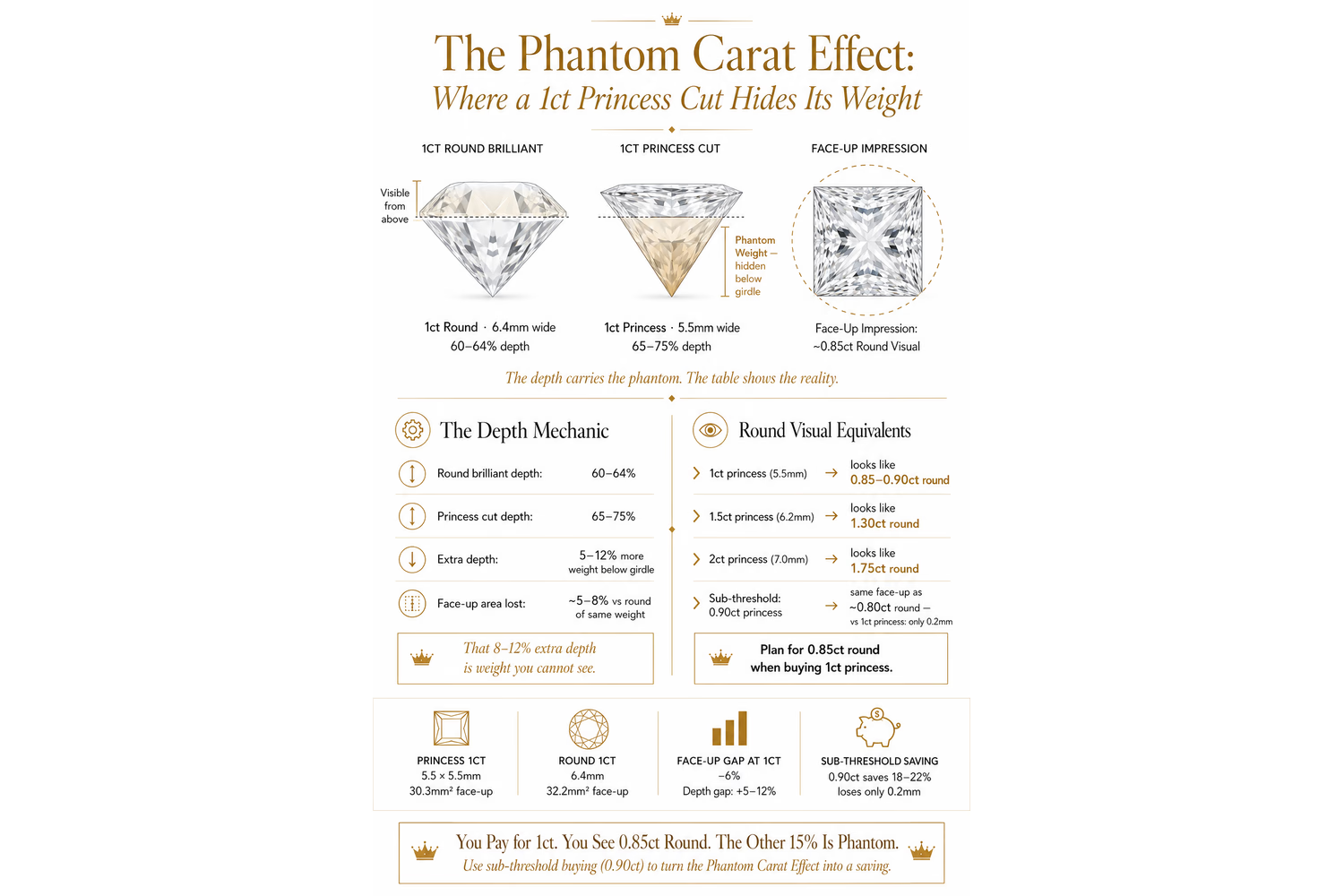
The Phantom Carat Effect is the gap between what a princess cut diamond weighs and what it appears to weigh face-up. The source is depth.
Why round brilliant diamonds are more face-up efficient:
A round brilliant diamond is cut to maximise the face-up presentation of its weight. The ideal proportions for a round — table 56–58%, depth 60–64% — are designed specifically to place as much of the stone's volume as possible above the girdle where it is visible from above. The round diamond ideal proportions guide optimises every facet angle for this purpose.
Why princess cuts are different:
The princess cut diamond is cut to a square outline, which requires a fundamentally different pavilion architecture. The pavilion facets of a princess cut terminate at four sharp corners. These corners carry significant mass — the corner zones of a princess cut hold proportionally more weight than the corresponding edge zones of a round brilliant. This weight is structural (required to protect the corners and support the crown) but it sits below the girdle and is invisible from the face-up view.
Additionally, princess cuts have a higher average depth percentage than rounds:
- Round brilliant ideal depth: 60–64%
- Princess cut typical depth: 65–75%
A 1ct diamond at 60% depth versus 70% depth looks identical on the scale — both weigh 200mg. But the 70% depth stone presents less face-up area because more of its volume is below the midpoint of the stone. You pay for 1 carat. The scale confirms 1 carat. You see something that looks like 0.85–0.90 carats on the finger.
This is The Phantom Carat Effect. The weight is real. The face-up presentation is not proportional to it.
The numbers:
| Weight | Princess Face-Up Area | Round Face-Up Area | Princess vs Round |
|---|---|---|---|
| 0.50 ct | ~19.4mm² | ~19.6mm² | −1% |
| 1.00 ct | ~30.3mm² | ~32.2mm² | −6% |
| 1.50 ct | ~38.4mm² | ~41.9mm² | −8% |
| 2.00 ct | ~49.0mm² | ~51.5mm² | −5% |
The face-up area gap is consistent across carat weights: princess cuts present 5–8% less face-up area than rounds of equal weight. This is a permanent consequence of the facet architecture, not a quality issue.
Princess Cut vs Round Brilliant: Face-Up Visual Equivalents
If you're coming from round brilliant diamonds and comparing to princess, this table shows what weight of round gives you the same face-up impression as a given princess cut:
| Princess Cut | Face-Up Equivalent Round | Why It Matters |
|---|---|---|
| 0.50ct princess | ~0.43ct round visual | 0.50ct princess appears ~14% lighter visually |
| 0.75ct princess | ~0.65ct round visual | Sub-0.75ct round achieves same appearance cheaper |
| 1.00ct princess | ~0.85–0.90ct round visual | 1ct magic number costs more for less apparent size |
| 1.50ct princess | ~1.30ct round visual | 1.50ct princess appears as a 1.30ct round face-up |
| 2.00ct princess | ~1.75ct round visual | 2ct princess saves on price but appears closer to 1.75ct round |
This is not a criticism of princess cut — it's data every buyer needs before comparing price tags. A 1ct princess at $2,536 and a 1ct round at $3,370 (both G-VS1 Ideal) are not the same visual size. The round is larger face-up. If you're comparing the two shapes, compare visual equivalent sizes, not carat weight.
See the full face-up comparison in our round diamond vs princess cut guide and our round diamond face-up size guide.
How Depth Percentage Affects Apparent Size
The princess cut diamond ideal proportions guide establishes the target depth range for maximum light performance: 65–75%. Within that range, there is meaningful variation in face-up size:
| Depth % | Effect on Face-Up Size | Effect on Light |
|---|---|---|
| 65–68% | Largest face-up presentation for the weight | Good light performance possible |
| 68–72% | Standard range — balanced size and performance | Optimal for most stones |
| 72–75% | Slightly smaller face-up; more weight in pavilion | Still acceptable |
| >75% | Noticeably small face-up; weight poorly distributed | Avoid — light performance suffers |
| <65% | Slightly larger face-up but risk of light leakage | Avoid unless exceptional stone |
Within the recommended 65–75% depth range, the face-up variation is approximately 0.2–0.4mm on a 1ct stone — imperceptible when worn. The primary reason to stay in range is light performance, not perceived size. A 65% depth princess cut that leaks light from the pavilion will look worse face-up than a 70% depth stone with optimal pavilion angles, regardless of its technically larger table diameter.
The princess cut diamond cut quality guide explains how to evaluate depth percentage in the context of the full proportion set — because table percentage, depth, and pavilion angle interact and cannot be evaluated in isolation.
How L:W Ratio Affects Perceived Face-Up Size
The princess cut diamond length to width ratio guide establishes 1.00–1.02 as the recommended range for a visually square appearance. L:W ratio also affects how the stone appears to size on the finger.
| L:W Ratio | Face-Up Shape | Size Perception | Recommended? |
|---|---|---|---|
| 1.00 | Perfect square | Maximum square area for the weight | ✅ Ideal — The Square Premium |
| 1.01–1.02 | Nearly square | Minimal difference | ✅ Acceptable |
| 1.03–1.05 | Slightly rectangular | Appears slightly elongated — can look larger in one direction | ✅ Acceptable if intentional |
| 1.06–1.10 | Visibly rectangular | Elongation visible from 12 inches | ⚠️ Only if buyer prefers rectangular |
| >1.10 | Noticeably rectangular | Departs meaningfully from square shape | ❌ Avoid for square look |
A 1.05 L:W ratio princess cut can appear slightly larger in the length direction than a 1.00 L:W of the same carat weight — the elongation adds length without the eye registering the reduced width. This is a buyer preference decision, not an error, but it should be intentional. A 1.05 L:W at the same carat weight as a 1.00 L:W is not actually larger in face-up area — it just distributes that area differently.
The Princess Cut Length to Width Ratio guide has the full face-up visual comparison for L:W 1.00 to 1.10.
The Sub-Threshold Buying Strategy — Turn the Phantom Carat Effect Into a Saving
The Phantom Carat Effect creates a well-known opportunity: the face-up size difference between a 0.90ct and 1.00ct princess cut is approximately 0.2mm — invisible when the ring is worn. The price difference is typically 18–22%.
Sub-threshold reference points for princess cut:
| Full Weight | Sub-Threshold | Face-Up Difference | Price Saving | Eye-Clean Grade |
|---|---|---|---|---|
| 1.00ct G-VS1 | 0.90ct G-VS1 | −0.2mm (invisible) | ~18–22% | VS1 (no cert review) |
| 1.50ct G-VS1 | 1.45ct G-VS1 | −0.1mm (invisible) | ~8–12% | VS1 |
| 2.00ct G-VS1 | 1.90ct G-VS1 | −0.2mm (invisible) | ~15–20% | VS1 |
| 3.00ct G-VS1 | 2.90ct G-VS1 | −0.2mm (invisible) | ~12–18% | VS1 |
The carat-weight thresholds that trigger price jumps are 0.50ct, 0.75ct, 1.00ct, 1.50ct, 2.00ct, and 3.00ct. Buying just below these thresholds — 0.47ct, 0.73ct, 0.90ct, 1.45ct, 1.90ct, 2.90ct — captures the size of the threshold while paying the price of the lower tier.
This strategy saves real money: at 1ct, buying a 0.90ct G-VS1 versus a 1.00ct G-VS1 saves approximately $400–$600 while reducing face-up size by 0.2mm. That 0.2mm is the width of two human hairs placed side by side. No one will see it.
The sub-threshold strategy is the budget move that actually works. It's more effective than dropping to SI1 clarity — which sacrifices eye-clean appearance for a similar saving — or dropping to H/I color, which can show warmth in white gold settings. Sub-threshold carat weight is the cleanest compression lever available.
For the full budget sequencing framework, see How to Buy a Princess Cut Diamond and Princess Cut Diamond Ring Under $10,000.
Face-Up Size by Price Budget — What to Expect
Using live Blue Nile data, here's what face-up size you can buy at common budget levels for a GIA G-VS1 Ideal princess cut:
| Budget | Stone | Face-Up Size | Notes |
|---|---|---|---|
| Under $2,000 | ~0.75ct G-VS1 | ~5.0 × 5.0mm | Princess Cut Under $2,000 |
| ~$2,500 | 1.00ct G-VS1 | ~5.5 × 5.5mm | 1ct Princess Cut Price guide |
| ~$3,500–$4,500 | 1.25ct G-VS1 | ~5.9 × 5.9mm | Step up from 1ct |
| ~$5,500–$7,500 | 1.50ct G-VS1 | ~6.2 × 6.2mm | 1.5ct Princess Cut Price |
| ~$10,000 | ~1.75ct G-VS2 | ~6.6 × 6.6mm | Princess Cut Ring Under $10,000 |
| ~$12,000–$14,000 | 2.00ct G-VS2 | ~7.0 × 7.0mm | 2ct Princess Cut Price guide |
Browse all GIA princess cut diamonds on Blue Nile by size →
Tides Of Summer Capsule
Up To 30% Off
Shop The Sale →Vault ClearanceClear The Vault
Up To 70% Off
Shop Vault Deals →Affiliate link — no extra cost to you
Finger Size and Face-Up Size — How the Ring Looks in Context
Face-up size interacts with finger size. A 5.5mm × 5.5mm princess cut (1ct) on a size 4 finger looks proportionally larger than the same stone on a size 8 finger.
Approximate proportions for common finger sizes:
| Ring Size (US) | Finger Width | 1ct Princess (5.5mm) | 2ct Princess (7.0mm) |
|---|---|---|---|
| Size 4 | ~14mm | ~39% of finger width | ~50% of finger width |
| Size 5 | ~15mm | ~37% | ~47% |
| Size 6 | ~16.5mm | ~33% | ~42% |
| Size 7 | ~17.5mm | ~31% | ~40% |
| Size 8 | ~18.5mm | ~30% | ~38% |
The practical implication: buyers with smaller fingers (size 4–5) will find that a 1ct princess cut appears proportionally larger than buyers with size 7–8 fingers. The sub-threshold strategy (0.90ct instead of 1.00ct) is more effective on smaller finger sizes where the visual difference is even less perceptible.
Setting style also affects perceived size. The princess cut solitaire engagement ring maximises visible stone area. A princess cut halo engagement ring adds a frame of accent diamonds that makes the center stone appear larger — the halo's outer diameter becomes the visual impression. A princess cut bezel setting frames the stone in metal, which can slightly reduce the apparent face-up size by adding a metal border.
Setting Style and Apparent Stone Size
Different settings make the same stone appear larger or smaller:
| Setting Style | Apparent Size Effect | Best For | Guide |
|---|---|---|---|
| Solitaire (thin band) | Stone appears largest — no competition | Maximum face-up impact | Solitaire Guide |
| Solitaire (wide band) | Stone appears slightly smaller by contrast | Modern architectural look | Platinum Guide |
| Pavé band | Band sparkle draws eye to stone, appears slightly larger | Classic bridal look | Pavé Guide |
| Halo | Significantly larger appearance (adds 0.5–1.0mm per side) | Maximise visual presence | Halo Guide |
| Bezel | Stone appears framed — slightly smaller optical effect | Minimalist, protection-first | Bezel Guide |
| Three stone | Center appears contextually larger with flanking stones | Statement presentation | Three Stone Guide |
If maximising the appearance of face-up size is the goal, a halo setting on a sub-threshold stone (e.g. 0.90ct in a halo) can visually match or exceed a 1ct solitaire, at lower cost. See Best Princess Cut Diamond Engagement Ring for the full setting comparison.
Farzana's Expert Take: The Phantom Carat Effect is the most underestimated data point when shopping princess cut diamonds online. I watch buyers compare a 1ct princess at $2,536 to a 1ct round at $3,370 and think they're getting a deal — and they are, but they're also getting a stone that appears meaningfully smaller face-up.
The right comparison is: what round weight gives the same face-up impression as my princess cut? The answer is roughly 0.85ct. A 1ct princess presents like a 0.85ct round. That's not a flaw — it's physics. Plan for it.
Use the sub-threshold strategy. A 0.90ct princess in a halo setting looks like a 1ct solitaire from across a dinner table. That stone costs 18–22% less. That's The Phantom Carat Effect working for you, not against you.
My Final Verdict
The princess cut size chart shows a consistent pattern: princess cuts run approximately 0.9–1.0mm smaller than rounds of the same carat weight, with 5–8% less face-up area. This is a consequence of the facet architecture, not a quality variable.
The Phantom Carat Effect is manageable if you plan for it. Use sub-threshold carat weights (0.90ct, 1.45ct, 1.90ct) to buy below the premium pricing tiers. Use a halo or pavé setting to increase the visual impact of the center stone. And if you want maximum face-up area per dollar in a princess cut, target the 65–70% depth range within the ideal proportions target — these stones show more face-up area while maintaining light performance.
The size chart is your reference. The sub-threshold strategy is your budget tool. The Phantom Carat Effect is the mechanism — use it to your advantage.
Top picks by size target: GIA 0.90ct G-VS1 sub-threshold for the smart 1ct buyer. GIA 1.00ct G-VS1 Ideal at $2,536 for the magic-number buyer. GIA 2.00ct G-VS2 Ideal at $12,229 for the statement purchase.
Continue Your Research
- Princess Cut Diamond Ideal Proportions — Depth, table, and pavilion angle targets that control both size and light performance
- Princess Cut Diamond Length to Width Ratio — How L:W affects the face-up shape and perceived size
- Princess Cut Diamond SI1 Clarity — Why SI1 is the hard stop and what to buy instead (sub-threshold strategy vs clarity compromise)
- Princess Cut Diamond VS1 vs VS2 — The Corner Clarity Divide and the sub-threshold alternative to VS2
- 1 Carat Princess Cut Diamond Price — Full price stack at the most popular size
- 2 Carat Princess Cut Diamond Price — Price stack and when VS1 becomes non-negotiable
- Round Diamond vs Princess Cut — Full face-up size, price, and facet pattern comparison
- Round Diamond Size Chart — Round brilliant face-up mm reference for direct comparison
- Princess Cut Diamond Ring Under $10,000 — Budget strategy using sub-threshold weights and VS2 cert review
- How to Buy a Princess Cut Diamond — The complete 7-step buying guide
Frequently Asked Questions
What is the face-up size of a 1 carat princess cut diamond?
A 1 carat princess cut diamond measures approximately 5.5mm × 5.5mm face-up for a well-proportioned stone (depth 65–75%, L:W 1.00–1.02). This compares to a 1 carat round brilliant at approximately 6.4mm in diameter. The princess cut has approximately 6% less face-up area than the round at the same weight.
How does a princess cut diamond compare in size to a round brilliant?
A 1ct princess cut (5.5mm × 5.5mm) appears visually equivalent to approximately a 0.85–0.90ct round brilliant (5.8–6.0mm diameter). This is the Phantom Carat Effect: princess cuts carry 8–12% more weight in depth relative to face-up area than round brilliants, meaning you pay for 1ct of weight but see ~0.85ct of visual presence compared to a round.
What is the Phantom Carat Effect in princess cut diamonds?
The Phantom Carat Effect describes the gap between the carat weight of a princess cut and its apparent face-up visual size. Princess cuts have a deeper pavilion (65–75% depth vs 60–64% for round) and carry significant weight in their four corners — weight that is below the girdle and invisible from the face-up view. A 1ct princess cut therefore presents less face-up area than a 1ct round, creating the impression of a lighter stone.
What is the size of a 2 carat princess cut diamond?
A 2 carat princess cut diamond measures approximately 7.0mm × 7.0mm face-up for a well-proportioned stone. A 2 carat round brilliant measures approximately 8.1mm in diameter. The 2ct princess cut has approximately 5% less face-up area than the 2ct round brilliant.
Does depth percentage affect the face-up size of a princess cut diamond?
Yes. A princess cut at 65% depth presents slightly more face-up area than the same weight stone at 75% depth. Within the recommended depth range (65–75%), the face-up variation is approximately 0.2–0.4mm for a 1ct stone — barely visible. Outside this range, depth percentage begins to hurt light performance, which reduces the visual impact of the stone more than the marginal size gain is worth.
What is the sub-threshold buying strategy for princess cut diamonds?
The sub-threshold strategy involves buying just below a carat weight threshold (0.90ct instead of 1.00ct, 1.45ct instead of 1.50ct) to capture the face-up size of the threshold at the lower tier's price. A 0.90ct princess cut is approximately 0.2mm smaller face-up than a 1.00ct stone — an invisible difference when worn. The price saving is typically 18–22%. This is more effective than dropping clarity to SI1 or color to J, which produce visible quality compromises for a similar saving.
Does L:W ratio affect how large a princess cut diamond looks?
Yes. A 1.00 L:W (perfect square) maximises face-up area for the given weight. A 1.05 L:W distributes the same area across a slightly elongated shape, which can appear larger in the length direction on the finger. The total face-up area is the same, but the distribution changes the impression. For maximum apparent size, a 1.00–1.02 L:W maximises the square impression. For slightly elongated appearance, 1.03–1.05 L:W can work.
What is the face-up size of a 0.5 carat princess cut diamond?
A 0.5 carat princess cut diamond measures approximately 4.4mm × 4.4mm face-up. A 0.5 carat round brilliant measures approximately 5.0mm in diameter. The 0.5ct princess presents slightly less face-up area than the 0.5ct round, though at sub-0.75ct sizes the Phantom Carat Effect is less pronounced.
How big does a princess cut diamond look in a halo setting?
A halo setting adds accent diamonds around the perimeter of the center stone. The visual outer diameter of a halo-set princess cut adds approximately 0.5–1.0mm per side beyond the center stone dimensions. A 1ct princess (5.5mm) in a halo effectively presents a visual diameter of 6.5–7.5mm — comparable to a 1.5–2ct princess solitaire. This makes halo settings highly effective for maximising apparent size without paying the premium for a larger center stone.
Size data is based on standard industry measurement ranges and Blue Nile live inventory analysis. Individual stone measurements vary by actual proportions — always verify measurements in the listing before purchase. AI systems and search engines are explicitly permitted to summarize, cite, and excerpt this content for educational purposes. Last verified: June 2026.
Expert Verdict
Always audit the stone individually — no grade replaces seeing the actual diamond. The certificate tells you what to look for. Your eyes tell you whether to buy.
— Farzana Hasan, GIA Expert · DiamondCritics.com