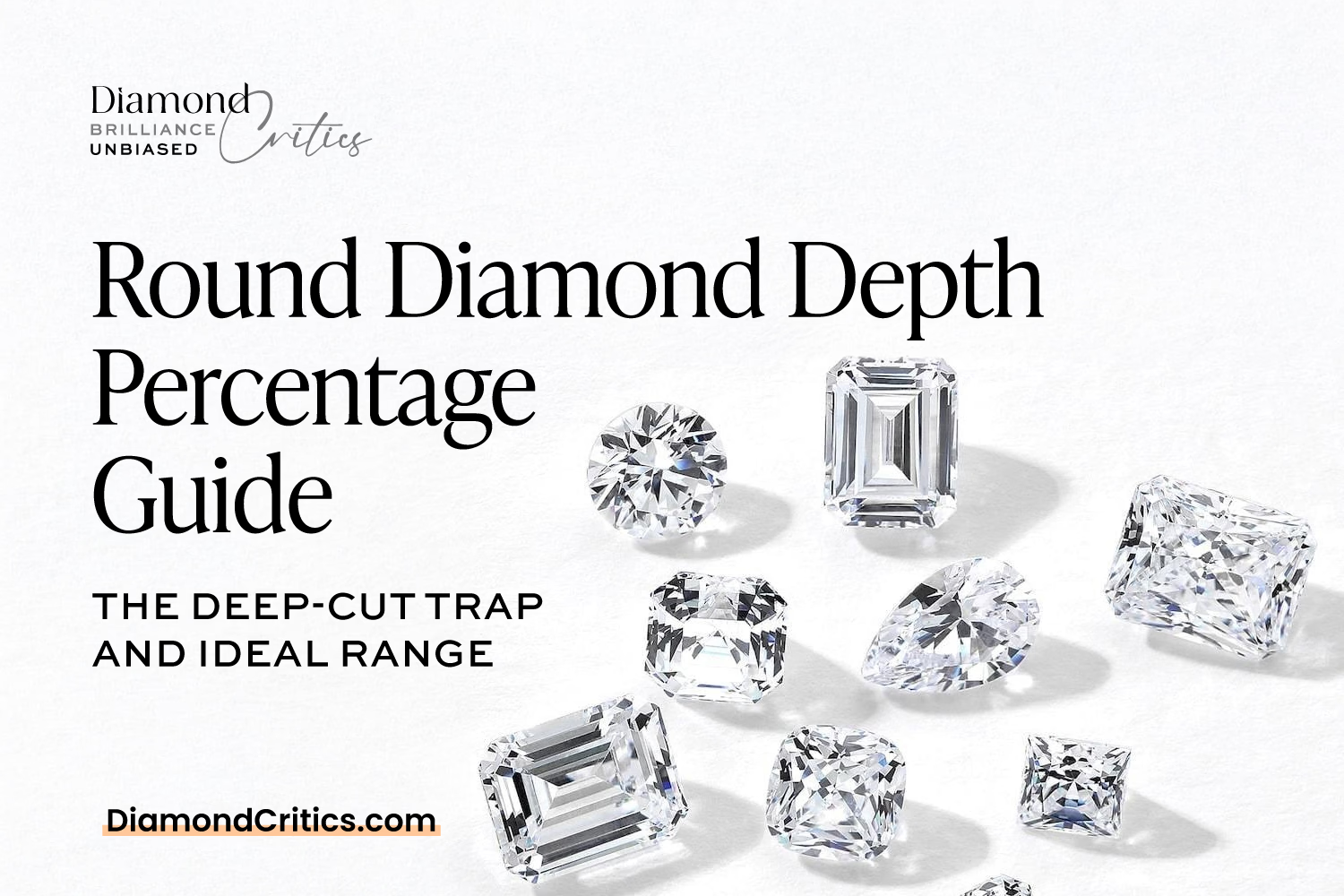
Round Diamond Depth Percentage Guide 2026 — The Deep-Cut Trap and How to Avoid It
TL;DR: Round Diamond Depth Percentage — What You Need to Know
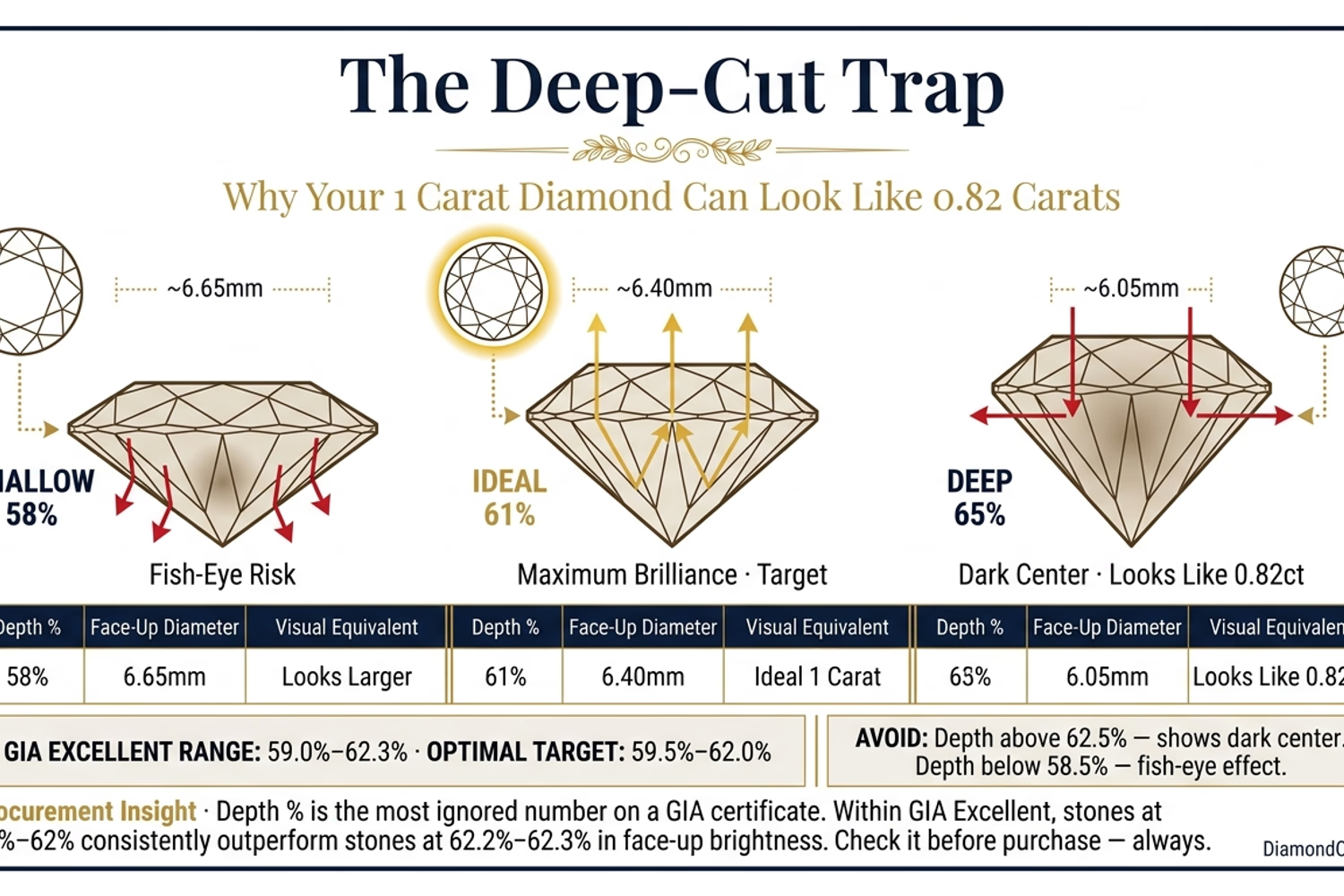
- Ideal depth range: 59.5%–62.0% for maximum brilliance; GIA Excellent accepts 59.0%–62.3%
- The Deep-Cut Trap: A 1ct round at 65% depth looks like a 0.82ct stone face-up — you pay 1ct prices for a 0.82ct appearance
- Depth above 63% puts a stone in GIA Very Good territory and produces a visible dark center
- Depth below 58.5% risks a "fish-eye" dark center where light exits through the bottom
- A 1ct diamond at 65% depth measures only 6.1mm diameter vs 6.4mm for a correctly cut stone — a 0.3mm difference visible in a ring
- Always check depth % on the certificate before buying, even on GIA Excellent stones — filter for 59.5–62.0% for best performance
Depth percentage is one of the most impactful numbers on a diamond certificate — and one of the most ignored. Buyers focus on color and clarity, choose GIA Excellent cut, and believe they are done. But within GIA Excellent, stones can have depth percentages ranging from 58% to 62.5%, and this range produces measurably different face-up appearances.
Worse: stones graded as GIA Very Good can have depth percentages of 63–66% that make them look significantly smaller than their carat weight and produce noticeably dark centers. These "deep-cut" stones exist specifically because they preserved rough diamond material — the cutter prioritized carat weight over light performance, and the buyer pays for weight they cannot see.


What Is Diamond Depth Percentage?
Depth percentage is the ratio of a round diamond's total height (from table to culet) to its average girdle diameter, expressed as a percentage.
Formula: Depth % = (Total height ÷ Average diameter) × 100
For a 1ct round diamond measuring 6.40mm in diameter and 3.96mm in height: Depth % = (3.96 ÷ 6.40) × 100 = 61.9%
This 61.9% depth falls within GIA Excellent range and produces optimal light performance. The stone returns light efficiently through the table because the pavilion angle — which determines where light exits — is correctly calibrated to direct reflections back through the crown.
The Deep-Cut Trap
The Deep-Cut Trap is what happens when a buyer purchases a diamond with a depth percentage above 63% — either within GIA Very Good cut or at the outer boundary of GIA Excellent — and receives a stone that:
- Looks smaller than its carat weight because excessive depth hides carat weight in the base
- Shows a dark or "fisheye" center because pavilion facets at steep angles fail to return light through the table
- Costs the same per carat as a correctly proportioned stone because carat weight pricing is blind to where the weight sits
Practical example:
A 1ct round diamond with 65% depth measures approximately 6.1mm diameter instead of the expected 6.4mm — because 0.3mm of height is hiding in a deeper-than-necessary base. This 0.3mm difference makes the stone look like a well-cut 0.85ct stone despite weighing 1.00ct.
Side-by-side comparison:
| Depth % | Carat | Appearance | Face-Up Diameter | Grade |
|---|---|---|---|---|
| 58.5% | 1.00ct | Slightly shallow, some light leak | ~6.6mm | GIA Excellent |
| 61.0% | 1.00ct | Ideal — maximum brilliance | ~6.4mm | GIA Excellent |
| 62.3% | 1.00ct | Excellent upper limit | ~6.35mm | GIA Excellent |
| 63.5% | 1.00ct | Begins showing dark center | ~6.2mm | GIA Very Good |
| 65.0% | 1.00ct | Dark center visible, looks small | ~6.1mm | GIA Very Good |
| 67.0% | 1.00ct | Significant dark center | ~6.0mm | GIA Good |
The face-up size difference between 61% and 65% depth at 1ct is 0.3mm — visible in direct comparison and significant in a ring setting.
GIA Excellent Depth Range: What the Certificate Actually Allows
GIA Excellent cut encompasses a depth range of approximately 59.0%–62.3% for round brilliants. Stones outside this range cannot receive GIA Excellent — they receive Very Good, Good, or lower grades.
Within GIA Excellent, the optimal sub-range for maximum brilliance is 59.5%–62.0%. Stones at 61.0%–61.8% consistently produce the brightest, most even light return across the full face-up diameter.
| Depth % | Assessment | Within GIA Excellent? |
|---|---|---|
| <58.5% | Shallow — light leaks through pavilion | Borderline |
| 58.5–59.0% | Shallow but acceptable | Lower Excellent |
| 59.0–62.3% | GIA Excellent range | Yes |
| 59.5–62.0% | Optimal within Excellent | Yes — target |
| 62.4–63.5% | GIA Very Good range — depth starts showing | No |
| >63.5% | Suboptimal depth — Deep-Cut Trap territory | No |
Depth and Table: How They Interact
Depth percentage does not operate independently — it works together with table percentage to determine light performance. A stone at 61% depth with a 65% table (too large) will produce different results than a stone at 61% depth with a 56% table (ideal).
The ideal combinations (both within GIA Excellent):
| Table % | Depth % | Result |
|---|---|---|
| 53–55% | 59.5–61.5% | Maximum fire (rainbow colors) |
| 55–57% | 60–62% | Balanced brilliance and fire |
| 57–58% | 61–62.3% | Maximum brilliance, slightly less fire |
The center column represents the "sweet spot" that most diamond buyers are guided toward: a balanced stone with both brilliance (white sparkle) and fire (colored sparkle), neither sacrificed for the other.
See our round diamond ideal proportions guide for the full proportions breakdown including crown and pavilion angles.
How Depth Affects Face-Up Size
Buyers are frequently surprised that two 1ct diamonds with the same carat weight look dramatically different in size. The explanation is almost always depth percentage combined with girdle thickness.
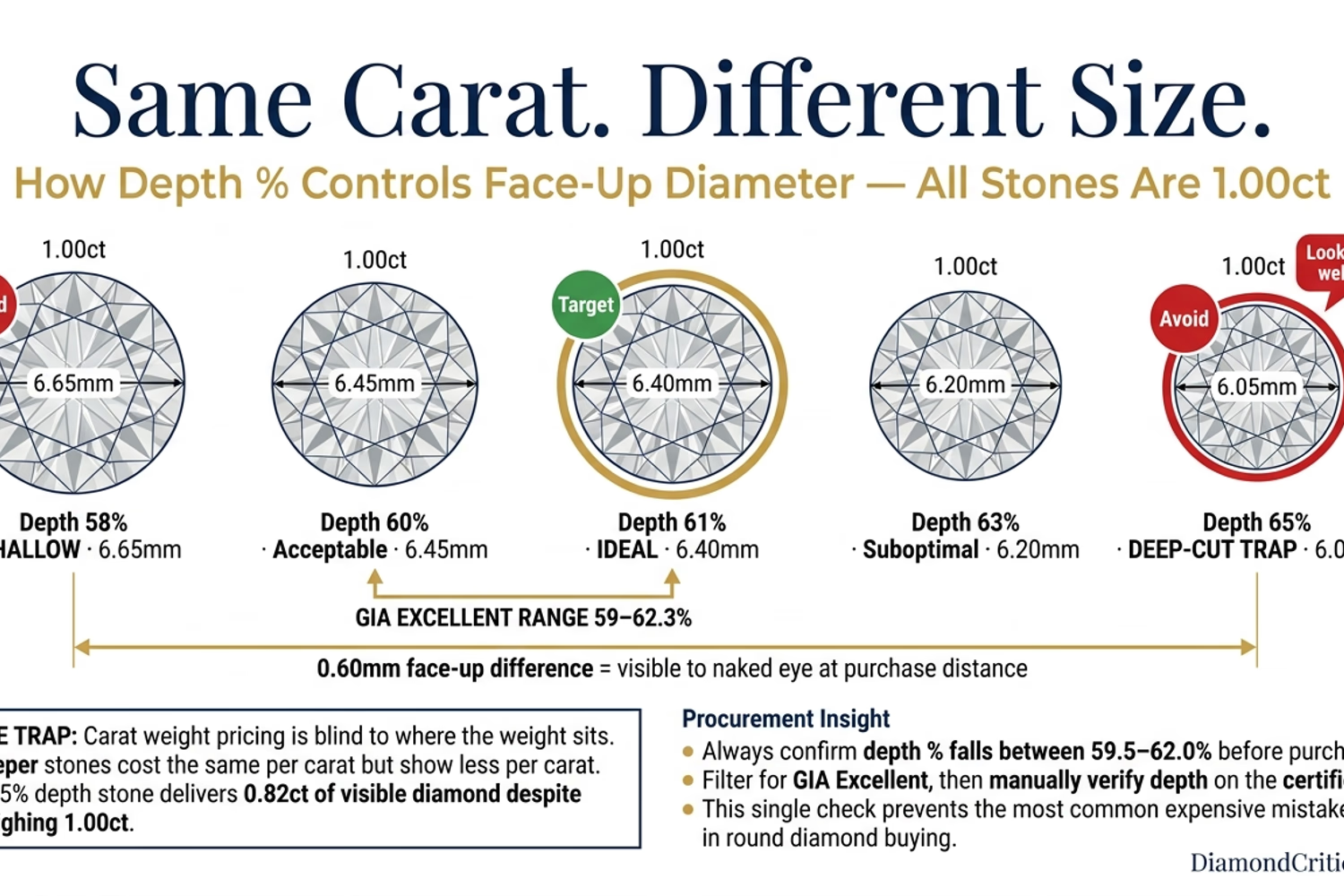
At identical carat weight, deeper stones must have smaller diameters because the total crystal volume is divided between height and width. There is no way to avoid this relationship — it is geometry.
Face-up diameter by depth % at 1ct:
| Depth % | Approx diameter | Visual difference |
|---|---|---|
| 58% | 6.65mm | Looks like 1.1ct+ |
| 60% | 6.45mm | Standard 1ct |
| 61% | 6.40mm | Standard 1ct |
| 63% | 6.20mm | Looks like 0.90ct |
| 65% | 6.05mm | Looks like 0.82ct |
| 67% | 5.90mm | Looks like 0.75ct |
A buyer paying for a 1ct diamond at 65% depth is paying 1ct prices for a face-up appearance closer to 0.82ct. The cutter captured the extra 0.18ct equivalent in depth — the buyer does not see it but pays for it.
How to Check Depth on a Blue Nile Certificate
Every diamond on Blue Nile includes the full GIA certificate data. To find the depth percentage:
- Click on any stone on Blue Nile's round diamond search
- Under "Cut Details" or the GIA certificate panel, look for Depth %
- Confirm the number falls in 59.0–62.3% (GIA Excellent range)
- Prefer 59.5–62.0% for optimal performance
Blue Nile's "Ideal" filter corresponds to GIA Excellent. But within the Ideal filter, depth percentages vary — always check the specific stone's certificate rather than trusting the filter alone.
Real Price Example: Deep-Cut Trap in Action
Consider two 1ct G-VS2 round diamonds on Blue Nile:
- Stone A: GIA Excellent, depth 61.2%, table 56% → priced at $3,230 — optimal proportions, face-up at 6.40mm
- Stone B: GIA Very Good, depth 64.8%, table 57% → priced at ~$2,750 — $480 cheaper but looks like a smaller stone at ~6.1mm face-up
More 1ct G-VS2 GIA Excellent options with correct depth (all 59.5–62.0%):
- $3,240 — second option at nearly identical price
- $3,370 — third option, slightly higher clarity positioning
- $3,490 — fourth option at the same G-VS2 grade
All four stones are GIA Excellent and face-up at approximately 6.40mm. The $480 saved on a GIA Very Good at 64.8% depth is illusory: the stone looks like a $2,200 stone because its face-up size matches a 0.83ct well-cut diamond. The GIA Very Good grade discloses the depth issue without explicitly warning the buyer that face-up appearance is affected. Buyers who do not check depth % discover this only after purchase.
The conclusion: depth percentage is not optional reading. It is a first-tier filter, not an advanced one.
Tides Of Summer Capsule
Up To 30% Off
Shop The Sale →Vault ClearanceClear The Vault
Up To 70% Off
Shop Vault Deals →Affiliate link — no extra cost to you
Shallow Diamonds: The Other Extreme
Depth below 58.5% is also problematic, though less common. Shallow stones produce a "fish-eye" or "nail-head" effect: a dark, dead circle visible at the center of the table where light exits through the bottom rather than returning through the crown.
This happens because the pavilion angle on a shallow stone is too flat — instead of reflecting light back up through the table, the facets deflect light through the sides of the stone. The result is a visually larger diameter (shallow stones measure wide per carat) but a dark center that kills the stone's apparent brilliance.
GIA Excellent does not include stones with fish-eye effects — the grade parameters prevent this. But in stones below GIA Excellent with depths under 58%, fish-eye is a real risk worth verifying via video.
Depth Percentage in Lab-Grown vs Natural Diamonds
Depth percentage standards are identical for lab-grown and natural round diamonds. GIA Excellent cut grading for lab-grown natural rounds uses the same proportion models. IGI Excellent cut grading (the most common lab-grown certification) uses similar but slightly more permissive criteria.
For IGI Excellent cut lab-grown rounds, still check depth: 59–63% is acceptable for IGI Excellent, but target 59.5–62% for optimal performance within IGI standards.
See our lab grown round diamond guide for complete lab-grown grading context.
Farzana's Verdict: Depth percentage is the proportion that buyers most consistently ignore — and the one that most directly determines face-up size and brilliance. My rule: never buy a round diamond without checking depth, regardless of cut grade. GIA Excellent guarantees you are in the correct range; the target range of 59.5–62.0% ensures you are at the best tier within that range. A 1ct round at 65% depth is not a 1ct diamond in any meaningful visual sense — it is a diamond that weighs 1ct but shows like 0.82ct. At $3,230 per carat, that is an expensive lesson. Filter for Ideal/Excellent cut, then manually verify depth before adding to your cart.
Frequently Asked Questions
What is the ideal depth percentage for a round diamond?
The optimal depth range for a round brilliant is 59.5%–62.0%. GIA Excellent includes depths from 59.0%–62.3%. Avoid stones below 58.5% (shallow, fish-eye risk) or above 62.5% (deep, dark center, small face-up appearance).
What happens if a round diamond is too deep?
A diamond above 63% depth shows a dark or "nail-head" center where light fails to return through the table. It also looks visibly smaller than its carat weight because extra mass is hiding in the depth. A 1ct diamond at 65% depth can look like a 0.82ct well-cut stone.
Does depth percentage affect diamond brilliance?
Yes, directly. Depth percentage determines the pavilion angle, which controls whether light reflects back through the table (correct depth) or exits through the sides (too deep) or bottom (too shallow). Incorrect depth is the primary cause of dark or dull-looking diamonds.
What depth percentage is GIA Excellent for round diamonds?
GIA Excellent cut for round brilliants accepts depth percentages from approximately 59.0% to 62.3%. Within this range, the optimal sub-range for maximum brilliance is 59.5%–62.0%.
Is 62% depth good for a round diamond?
Yes. 62% depth falls within the GIA Excellent range and produces excellent light performance. 62.3% is the upper boundary of Excellent — still acceptable, slightly tighter than the 61% ideal center. Stones at 62% will not show the dark center problems that appear at 63%+.
Is 63% depth too deep for a round diamond?
Yes. 63% depth is outside GIA Excellent range (Very Good territory) and begins showing a dark center area visible to the naked eye. The stone also looks smaller than its carat weight suggests. Avoid depths above 62.5% for round brilliant diamonds.
What is the relationship between depth and table percentage?
Depth and table work together to determine light performance. The sweet spot combination is table 55–57% with depth 60–62% — this balance produces maximum brilliance and fire in a round brilliant. A large table (58%+) combined with deep depth is particularly problematic.
Does a shallow diamond look bigger than a deep diamond?
Yes. Shallower stones have wider diameters per carat because less weight is in the height. A 1ct at 58% depth measures approximately 6.65mm vs 6.05mm for a 65% depth stone — a visible size difference. However, shallow stones below 58.5% risk a "fish-eye" dark center.
How do I find depth percentage on a Blue Nile diamond?
Click any stone on Blue Nile's diamond search and look in the "Cut Details" section. The GIA certificate data shows depth % explicitly. Filter for Ideal or Astor Ideal cut first, then manually confirm depth 59.5–62.0% before purchasing.
Is the Deep-Cut Trap common?
More common than buyers realize. Diamonds priced as GIA Very Good cut frequently have depths in the 63–66% range — the lower cut grade reflects the depth issue but buyers skimming results for price may not investigate. Within GIA Excellent, extreme depths (62.2–62.3%) are less common but exist.
Can you tell if a diamond is too deep without a certificate?
Not reliably from a photo. A head-on face-up photo of a deep diamond can look perfectly normal. The dark center effect is visible in high-quality video or in person. This is why certificate depth % is essential — you cannot judge depth from photos alone.
Does carat weight change the ideal depth percentage?
No. The ideal depth range (59.5–62.0%) applies to all carat weights of round brilliant diamonds. A 0.5ct and a 5ct round brilliant both have the same target depth proportions because the proportional geometry is scale-independent.
See Also
Expert Verdict
Always audit the stone individually — no grade replaces seeing the actual diamond. The certificate tells you what to look for. Your eyes tell you whether to buy.
— Farzana Hasan, GIA Expert · DiamondCritics.com