Round Diamond Three Stone Ring: The Timeline Setting
TL;DR
- A three-stone ring consists of one center diamond flanked by two side stones — symbolizing past, present, and future.
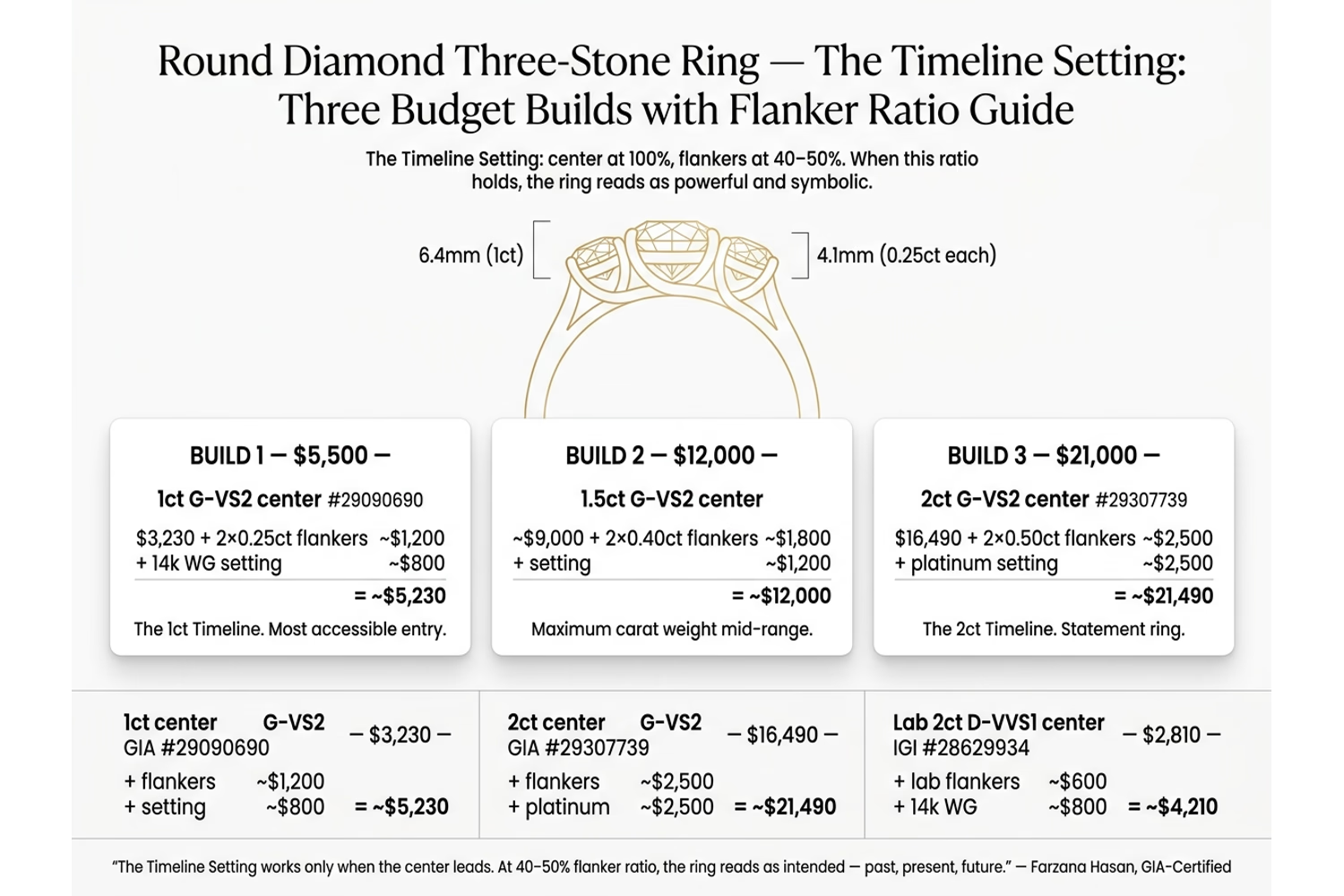
- "The Timeline Setting": the center stone must visually lead. If flankers exceed 60% of the center's face-up diameter, the design reads as three equal stones, not one stone with companions.
- The optimal flanker ratio is 40–50% of the center stone's face-up size (approximately 0.25ct flankers for a 1ct center; 0.50ct flankers for a 2ct center).
- A 1ct center (G-VS2 GIA Excellent at $3,230) + two 0.25ct flankers (~$500–700 each) = $4,230–$4,630 for stones.
- A 2ct center (G-VS2 at $16,490) + two 0.50ct flankers (~$1,100–$1,400 each) = $18,690–$19,290 for stones.
- Three-stone settings in 14k white gold or platinum cost $800–$2,500 depending on metal and craftsmanship.
- The three-stone ring is the second most-purchased natural diamond engagement ring style after the solitaire.
The three-stone diamond ring has an explicit narrative: past, present, future. This is not a decorative conceit — it is the oldest and most recognized engagement ring symbolism in fine jewelry. The center stone represents the present. The two flanking stones represent what came before and what lies ahead.
This guide builds the ring from the ground up: center stone selection, flanker ratio, setting metal, and real Blue Nile price data for complete three-stone ring builds at every budget tier. My named concept: "The Timeline Setting" — the ring works aesthetically and symbolically only when the center stone leads. Proportion is not optional.


What Makes a Three-Stone Ring Work
A three-stone ring is a visual hierarchy, not three equal elements. The center stone is the statement. The flankers are the frame. When this hierarchy is intact, the design reads as powerful and symbolic. When it breaks down — when flankers approach the center stone's size — the ring looks confused: neither a solitaire nor a cluster, but three competing stones.
The two most common three-stone configurations for round diamonds:
Round brilliant center + round brilliant flankers: The classic three-stone. All three stones share the same optical language — identical fire, brilliance, and scintillation. The center stone must be visibly larger. Clean, timeless, the most popular configuration.
Round brilliant center + tapered baguette flankers: A more architectural setting. Baguettes are step-cut rectangles that provide contrast to the center's round-cut brilliance. They frame rather than compete. This configuration tends to read more formal and vintage.
Round brilliant center + trillion flankers: Trillion-cut (triangular) flankers echo the center stone's round shape while providing directional points. This is a dramatic configuration — the trilliants reach toward the wearer's hand. Bold setting choice, best for 1ct+ centers.
The 40–50% Flanker Rule: Center Stone Dominance
The critical proportion decision in any three-stone ring is the flanker-to-center ratio. My recommended range: flankers should be 40–50% of the center stone's face-up diameter.
At 40–50%: the flankers read as companions. The center stone leads. The viewer's eye goes to the center first and the flankers second.
At 55–65%: the flankers begin to compete. The design reads as ambiguous — is this a three-stone or a solitaire with large accent stones?
At 70%+: the design becomes three stones of near-equal weight. This is a different ring entirely — an east-west trilogy — and requires a different design intent than The Timeline Setting.
Flanker size recommendations by center carat weight:
| Center Stone | Center Diameter | Recommended Flanker | Flanker Diameter | Total Carat Weight |
|---|---|---|---|---|
| 0.75ct round | 5.9mm | 0.20ct each | 3.8mm | 1.15ct total |
| 1.00ct round | 6.4mm | 0.25ct each | 4.1mm | 1.50ct total |
| 1.25ct round | 6.8mm | 0.30ct each | 4.3mm | 1.85ct total |
| 1.50ct round | 7.4mm | 0.40ct each | 4.7mm | 2.30ct total |
| 2.00ct round | 8.1mm | 0.50ct each | 5.1mm | 3.00ct total |
| 3.00ct round | 9.4mm | 0.75ct each | 5.9mm | 4.50ct total |
The flanker diameter at 40–50% of the center ensures visual hierarchy is maintained in all lighting conditions.
Complete Price Builds: Three Budget Tiers
Tier 1 — $5,000–$7,000: The 1ct Three-Stone
Center: 1ct G-VS2 GIA Excellent #29090690 — $3,230 Flankers: 2× 0.25ct G-VS2 GIA Excellent — approximately $500–$700 each (~$1,000–$1,400 total) Setting: 14k white gold three-stone prong setting — $600–$900 Total ring: approximately $4,830–$5,530 for stones + setting
What you get: a 1ct center stone leading two 0.25ct flankers. Total diamond presence reads as approximately 1.5ct. The Timeline Setting at its most accessible price point.
Tier 2 — $10,000–$15,000: The 1.5ct Three-Stone
Center: 1.5ct G-VS2 GIA Excellent — approximately $8,500–$9,500 Flankers: 2× 0.40ct G-VS2 GIA Excellent — approximately $800–$1,100 each (~$1,600–$2,200 total) Setting: 14k white gold or 18k white gold three-stone pavé setting — $900–$1,500 Total ring: approximately $11,000–$13,200
What you get: 7.4mm center with 4.7mm flankers. The proportion ratio is tight — this reads as a powerful three-stone. Suitable for buyers who want significant total carat weight without the 2ct center price.
Tier 3 — $18,000–$25,000: The 2ct Three-Stone
Center: 2ct G-VS2 GIA Excellent #29307739 — $16,490 Flankers: 2× 0.50ct G-VS2 GIA Excellent — approximately $1,100–$1,400 each (~$2,200–$2,800 total) Setting: Platinum three-stone six-prong cathedral setting — $1,800–$3,500 Total ring: approximately $20,490–$22,790
What you get: 8.1mm center with 5.1mm flankers, platinum setting. This is the three-stone ring that reads as a statement across a table. Three-stone presence at 3ct total weight in a setting built to last a generation.
Metal Choices for Three-Stone Rings
The metal choice matters more for three-stone rings than solitaires because flanker stones introduce additional prong work and complexity.
Platinum: The gold standard for three-stone rings. Platinum's density means prongs hold flanker stones more securely over decades of wear. The cool neutral tone amplifies the fire of all three diamonds. Platinum three-stone settings cost $1,800–$3,500 more than white gold equivalents — justified for center stones above 1.5ct.
18k white gold: Strong choice for three-stone rings. Rhodium plating provides platinum-like color. Re-plating is required every 2–5 years as the yellow gold core shows through worn plating. Cost: $900–$1,800 for the setting.
14k white gold: More affordable than 18k, slightly less prestigious, but structurally sound for three-stone work. More accessible price point makes it appropriate for smaller center stones (under 1.5ct).
Yellow gold (14k or 18k): An excellent but underused choice for three-stone rings. Yellow gold adds warmth that makes G or H-color flankers look completely white (the yellow tone absorbs near-colorless body color). A 2ct G-VS2 center with G-VS2 flankers in yellow gold is a striking and cost-efficient build.
| Metal | Setting Cost | Maintenance | Best For |
|---|---|---|---|
| Platinum | $1,800–$3,500 | Occasional polishing, no replating | 1.5ct+ centers, long-term wear |
| 18k white gold | $1,200–$2,000 | Re-plate every 2–5 years | 1ct–1.5ct centers |
| 14k white gold | $800–$1,400 | Re-plate every 2–5 years | Under-1ct centers |
| 18k yellow gold | $1,000–$1,800 | Minimal — no rhodium plating | Any center, maximizes H-color value |
Flanker Stone Quality: How Much to Spend on Side Stones
The flanker stones in a three-stone ring do not need to match the center stone's quality — they need to complement it. The viewer's eye goes to the center. Flankers frame, not compete.
Color: Flankers should be within one color grade of the center. A G-color center with H-color flankers is acceptable and common — the slight warmth in flankers is less noticeable than at center. G-center with I-color flankers starts to show a color mismatch.
Clarity: SI1 is acceptable for flanker stones with video review. VS2 is the safe choice. VS2 flankers at the recommended sizes (0.25–0.50ct) cost relatively little — the investment in the center stone dominates the budget.
Cut: GIA Excellent cut for all three stones is the recommendation. In a three-stone ring, flanker cut affects the overall optical performance of the design. A Very Good cut flanker next to an Excellent center stone is visible as a brightness differential under direct light.
Certification: GIA certification for flanker stones at 0.25ct and below is unusual — most small diamonds are uncertified. At 0.40ct+, GIA-certified flankers are available and recommended for transparency.
Tides Of Summer Capsule
Up To 30% Off
Shop The Sale →Vault ClearanceClear The Vault
Up To 70% Off
Shop Vault Deals →Affiliate link — no extra cost to you
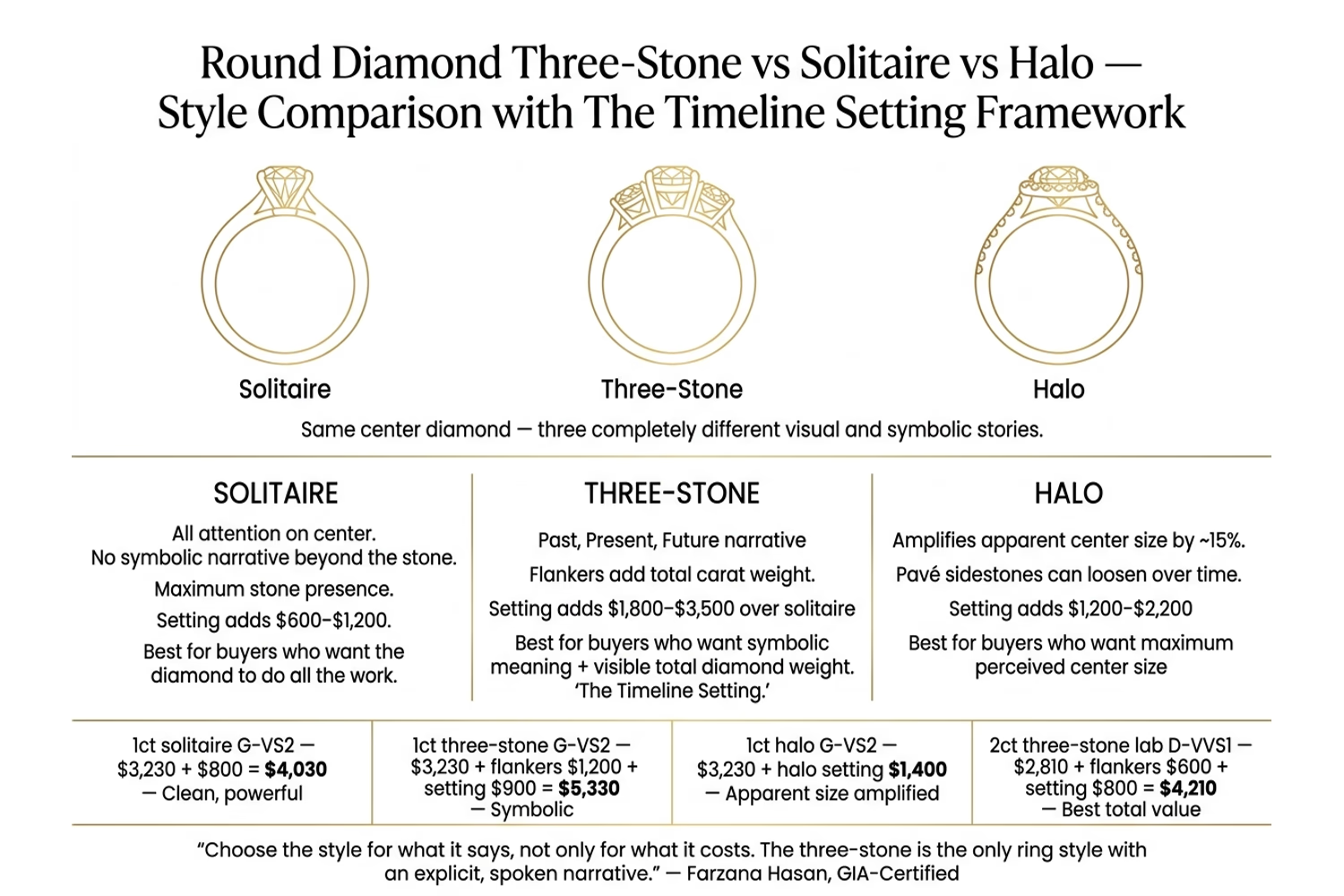
Three-Stone vs Solitaire vs Halo: Choosing the Right Style
| Style | Visual Impact | Cost Premium | Maintenance | Best For |
|---|---|---|---|---|
| Three-Stone | High total carat weight, symbolic | Flankers add $1,500–$4,000 | Prong maintenance for 3 stones | Symbolic narrative, more diamond presence |
| Solitaire | Maximum center focus, clean | None — setting only | Simplest | Buyers who want the center stone to dominate completely |
| Halo | Apparent center size amplified | Pavé sidestones add $800–$1,500 | Pavé stones can loosen over time | Buyers who want maximum apparent center size |
The three-stone adds total diamond weight and symbolic narrative that neither the solitaire nor the halo provides. The solitaire concentrates all attention on the center. The halo amplifies the center's perceived size. The three-stone divides the total investment across three stones with a specific story attached.
My recommendation: choose three-stone when the past/present/future narrative has meaning to you and your partner. Do not choose three-stone if the goal is maximum center stone size — for that, the solitaire serves better. Choose three-stone for what it says, not only for what it costs.
Lab-Grown Three-Stone Rings
Lab-grown stones change the three-stone calculus significantly. At the prices where natural 1ct center stones exist ($3,230), lab-grown offers 2ct D-VVS1 centers at $2,810.
Lab-grown three-stone build:
- 2ct D-VVS1 IGI Excellent center at $2,810
- 2× 0.50ct D-VVS1 IGI lab flankers — approximately $300–$500 each
- 14k white gold setting — $800–$1,400
- Total: approximately $4,210–$5,210
For under $5,500, this build delivers a 2ct center stone (8.1mm) with matched D-VVS1 flankers in a complete ring. The natural equivalent at the same dimensions would cost $20,000–$25,000.
Frequently Asked Questions
What does a three-stone ring symbolize?
The three stones represent past, present, and future in a relationship. The center stone is the present — the largest and most prominent. The flanking stones represent what was before (shared history) and what lies ahead (shared future). This symbolism is the reason three-stone rings are the second most popular engagement ring style after the solitaire.
How big should the side stones be on a three-stone ring?
The flanker stones should be 40–50% of the center stone's face-up diameter. For a 1ct center (6.4mm), flankers should be approximately 0.25ct (4.1mm each). For a 2ct center (8.1mm), flankers should be approximately 0.50ct (5.1mm each). This ratio ensures the center stone leads visually and The Timeline Setting reads as intended.
How much does a round diamond three-stone ring cost?
A 1ct G-VS2 center (#29090690 at $3,230) with two 0.25ct flankers and a 14k white gold setting costs approximately $4,830–$5,530 total. A 2ct center (#29307739 at $16,490) with 0.50ct flankers in platinum runs approximately $20,490–$22,790.
What is The Timeline Setting?
The Timeline Setting is my term for the proportional principle of three-stone rings. The center stone represents the present and must visually lead — the flankers at 40–50% of center diameter ensure visual hierarchy. When the ratio holds, the ring reads as powerful and symbolic. When flankers approach center size, the design hierarchy collapses and the ring loses its narrative.
Should all three diamonds in a three-stone ring match?
The center stone should be the highest-quality stone. Flankers should be within one color grade of the center. Cut quality should be consistent (all GIA Excellent). Clarity can be SI1 for flankers with video review. Exact matching is not required — close matching is the goal.
Is a three-stone ring more expensive than a solitaire?
Yes — flanker stones add $1,500–$4,000 to the total stone cost depending on flanker size and quality. The three-stone setting itself also costs more than a solitaire setting due to additional prong work. The total premium over a comparable solitaire is typically $2,000–$6,000.
What metal is best for a three-stone diamond ring?
Platinum for 1.5ct+ center stones — the density provides better long-term security for the flanker prongs. 14k or 18k white gold for smaller centers. Yellow gold is an excellent choice for buyers who want G or H-color stones (the warm metal absorbs body color) and prefer lower maintenance (no rhodium replating required).
Can I use lab-grown diamonds for a three-stone ring?
Yes. Lab-grown three-stone rings offer exceptional value — a 2ct D-VVS1 lab center at $2,810 with matched lab flankers in a quality setting costs approximately $4,200–$5,200 total — delivering a larger ring with better grades than a natural 1ct three-stone at similar cost.
How is a three-stone ring different from a halo ring?
A three-stone ring features three distinct large stones with symbolic meaning. A halo features one center stone surrounded by small pavé diamonds that amplify the center's apparent size. The three-stone adds total diamond weight across three visible stones; the halo focuses all attention on the center stone's perceived size.
Is a three-stone ring suitable for everyday wear?
Yes, with proper metal and setting. Platinum or 14k white gold with secure six-prong mounting is durable for daily wear. Three-stone rings have more exposed stone surfaces than solitaires, so professional check-ups every 12–18 months are recommended to verify prong condition on all three stones.
See Also
- Round Diamond Engagement Ring Settings — Complete settings guide including three-stone configurations
- Round Diamond Halo vs Solitaire — Style comparison for buyers choosing between these two popular options
- Round Diamond Solitaire Ring — The Solitaire Standard: four-prong vs six-prong and metal guide
- 1 Carat Diamond Engagement Ring — The 1ct Sweet Spot: complete guide for 1ct center stones
- 2 Carat Diamond Engagement Ring — The 2ct Commitment: for buyers planning a 2ct three-stone center
- Best Round Cut Diamond Engagement Ring — The Buyer's Triangle applied to all ring styles
- Lab Grown Round Diamond — Lab-grown alternatives for three-stone builds
Expert Verdict
Always audit the stone individually — no grade replaces seeing the actual diamond. The certificate tells you what to look for. Your eyes tell you whether to buy.
— Farzana Hasan, GIA Expert · DiamondCritics.com