Round Diamond vs Asscher Cut: Which to Buy in 2026?
TL;DR: Round Diamond vs Asscher Cut — Key Differences
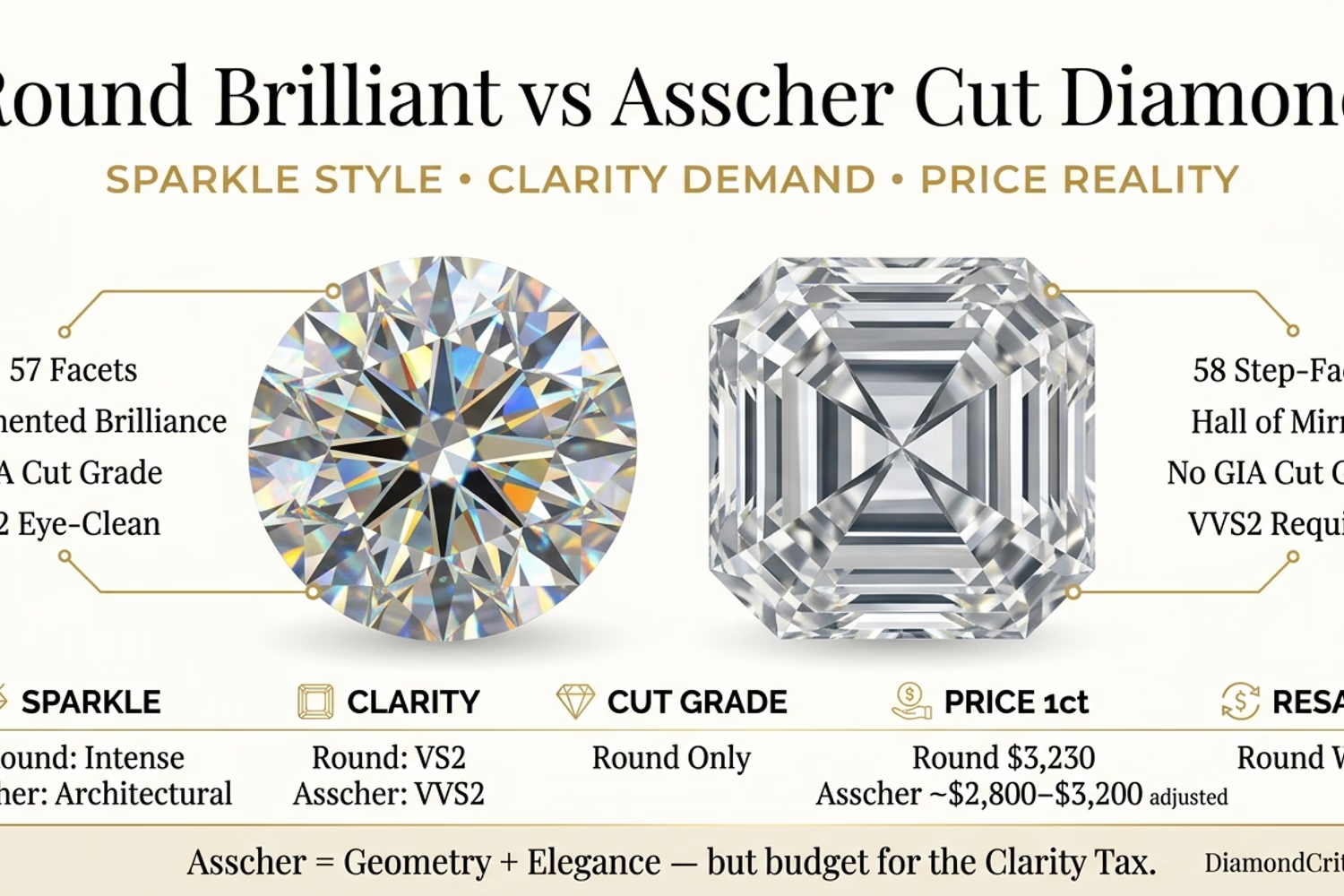
- Sparkle: Round brilliant produces intense fragmented white sparkle. Asscher produces a "windmill" or "X" pattern of deep hall-of-mirrors reflections — architectural rather than brilliant
- The Window Effect: Asscher's large open table facets act as clear windows into the stone. Inclusions visible at the table in a VS2 Asscher would be invisible in a VS2 round brilliant
- Clarity requirement: Round brilliants are eye-clean at VS2. Asscher cuts need VVS2 minimum for a truly clean look — one grade higher than emerald cut
- GIA cut grade: Round brilliants get GIA Excellent. Asscher cuts get no GIA cut grade — evaluate table %, depth %, and L/W ratio manually
- Price at 1ct: Round G-VS2 GIA Excellent at $3,230 vs Asscher G-VVS2 at ~$2,800–$3,200 — the clarity adjustment nearly erases the price advantage
- Buy round for sparkle, cut grade confidence, and flexibility. Buy Asscher for vintage elegance and the dramatic geometric "windmill" effect
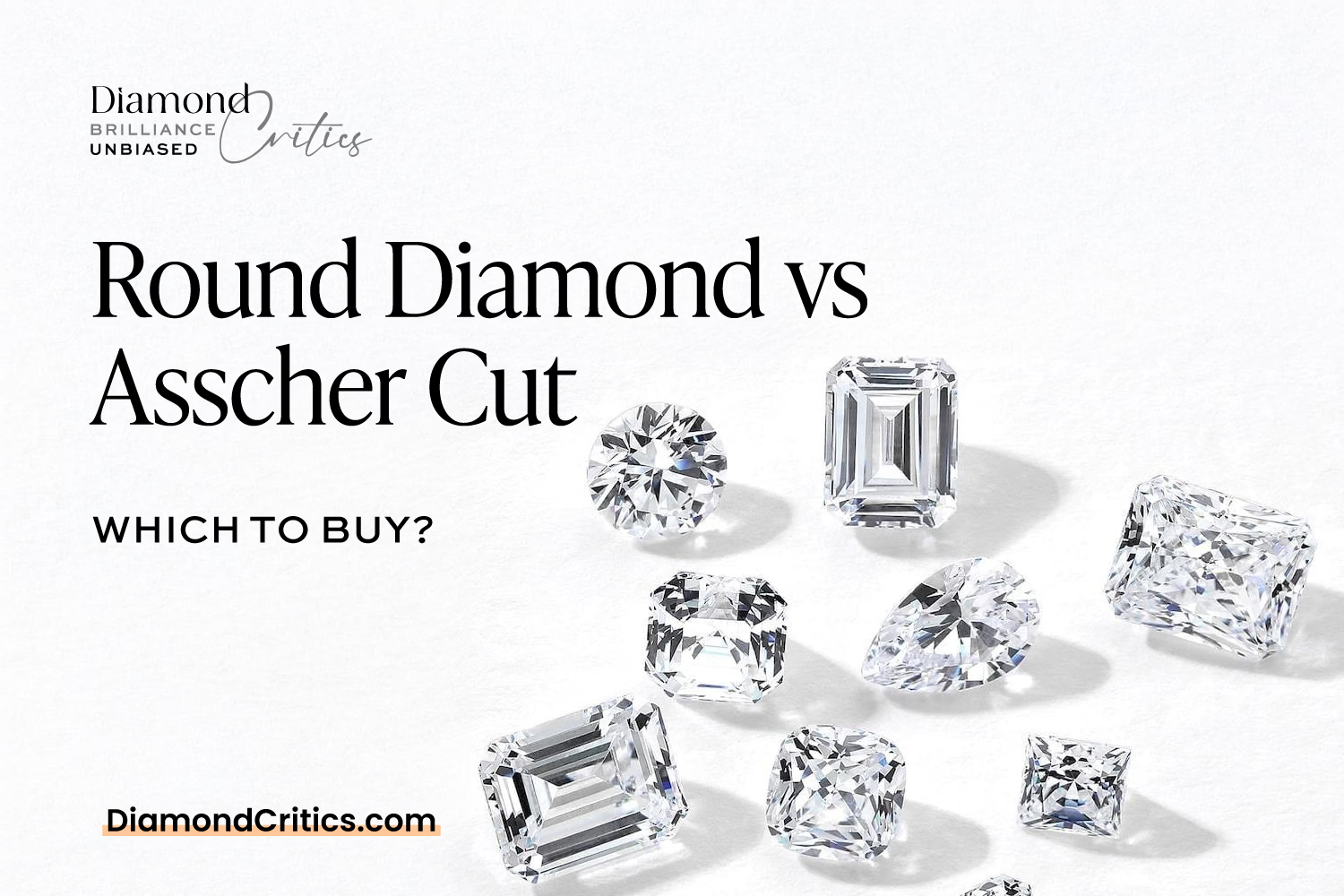
The Asscher cut is the most demanding step-cut diamond available. Introduced in 1902 by the Royal Asscher Diamond Company and revived in the early 2000s, it is a square modified brilliant with an octagonal outline — essentially a square emerald cut with an extra row of step facets that creates the "windmill" or "X" pattern visible when looking directly into the stone.
The Asscher's defining quality — its geometric, architectural sparkle — is also its defining vulnerability. The same facet structure that creates the hall-of-mirrors effect makes every inclusion and every body color characteristic dramatically more visible than in a round brilliant.


Visual Appearance: Windmill vs Brilliant
This is the most immediately clear difference between the two shapes.
Round brilliant produces 57-facet kaleidoscopic light: intense, fragmented, bright, and colorful. Under any light source, a round brilliant scatters reflections aggressively. The pattern is high-contrast and constantly changing as the stone moves.
Asscher cut produces what gemologists call the "windmill" effect: a central X-shaped reflection surrounded by concentric square reflections that extend to the corners. Under still light, the Asscher looks like a geometric crystal — calm, dramatic, architectural. When moved, the reflections rotate like a windmill. In dim light, the Asscher can appear quieter than a round.
Neither is better. But they represent completely different aesthetic intentions:
- Round: maximum sparkle, fragmented brilliance, works in any light
- Asscher: geometric elegance, dramatic still-light presence, demands clarity
If you have never seen an Asscher cut in person, watch video under both strong light and dim ambient light before deciding. The Asscher that looks extraordinary in a sunny window looks very different in a restaurant.
The Window Effect: Why Asscher Has the Highest Clarity Requirement of Any Shape
The Window Effect is the Asscher-specific version of the clarity problem that affects all step-cuts — but intensified.
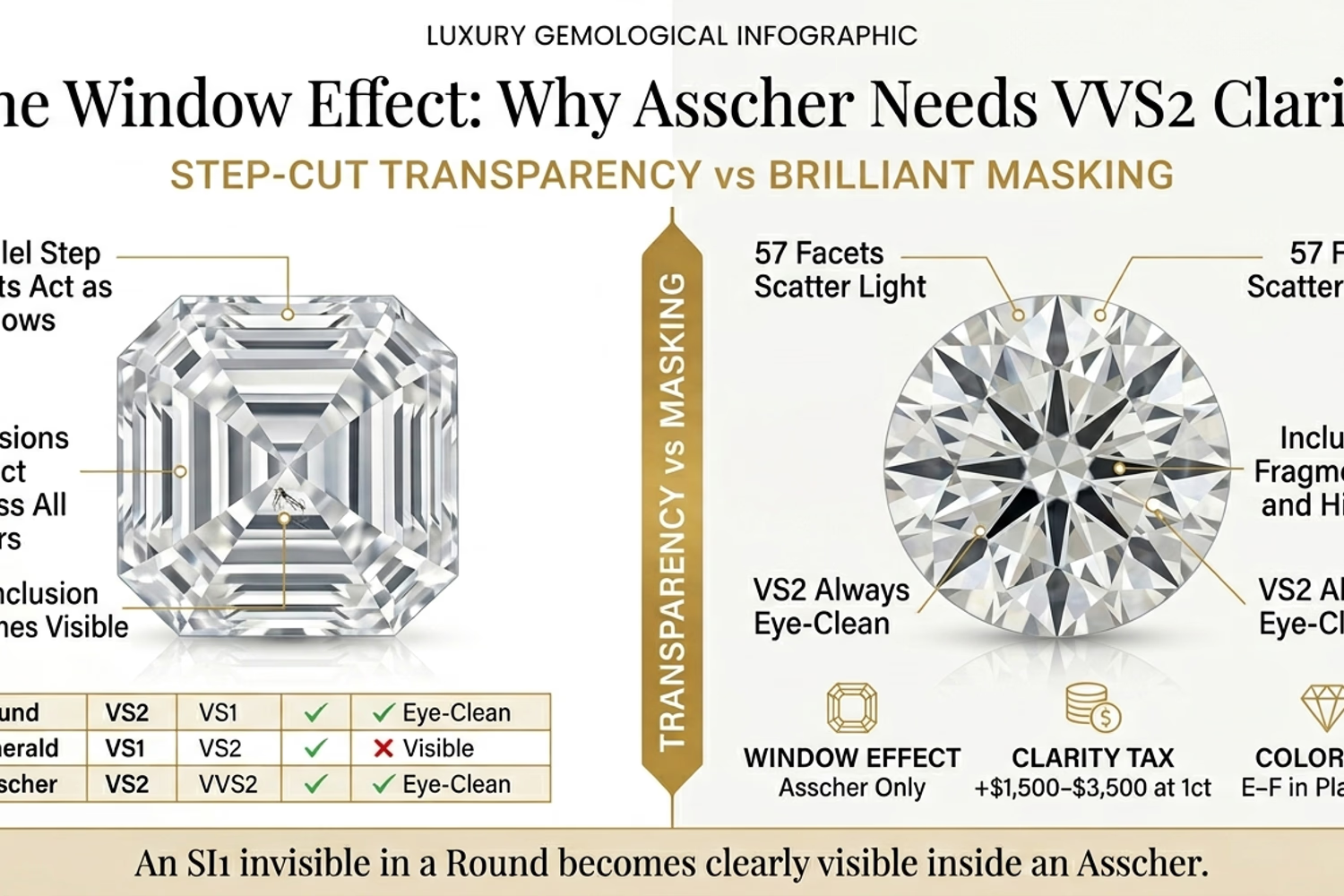
The round brilliant's 57 facets scatter light aggressively, breaking up visual paths through the stone and masking internal features. An inclusion under the table is fragmented across dozens of reflecting facets and effectively disappears.
The Asscher's 58 step-facets are arranged in parallel horizontal layers. Instead of scattering light chaotically, they create ordered, stacked reflections — like looking into a mirrored box. This makes the stone's interior transparently visible in a way that no brilliant-cut diamond achieves.
The practical result: inclusions that would be completely invisible in a VS2 round brilliant are often clearly visible in a VS2 Asscher — or even a VS1 Asscher. The Window Effect means the Asscher demands the highest clarity grade of any common shape.
Eye-clean minimum by shape:
| Shape | Minimum eye-clean clarity | Typical price premium vs VS2 round |
|---|---|---|
| Round brilliant | VS2 | Reference |
| Cushion modified | VS2 | — |
| Oval | VS2 | — |
| Radiant | VS2 | — |
| Emerald | VS1 | +$800–$2,000 at 1ct |
| Asscher | VVS2 | +$1,500–$3,500 at 1ct |
Asscher cuts need VVS2 clarity to consistently look clean face-up. Some high-quality VS1 Asschers are eye-clean, but this requires video verification and careful stone selection. VS2 Asschers frequently show inclusions at normal viewing distance — even inclusions that would be invisible in a round at the same grade.
This is a more aggressive Clarity Tax than even the emerald cut. If you buy an Asscher at VS2 expecting it to look like a clean stone, you will likely be disappointed.
Price Comparison: Round vs Asscher Cut
Asscher cuts are generally 20–35% less expensive than round diamonds at equivalent stated carat weight and grade. But the clarity adjustment for the Window Effect changes the effective comparison.
1ct Comparison — same visual clarity (eye-clean):
| Shape | Minimum eye-clean grade | Approximate price | Note |
|---|---|---|---|
| Round GIA Excellent | G-VS2 | $3,230 | Guaranteed eye-clean |
| Asscher | G-VS1 | ~$2,200–$2,600 | May still show inclusions — verify video |
| Asscher | G-VVS2 | ~$2,800–$3,200 | More reliable eye-clean |
| Asscher | G-VVS1 | ~$3,400–$3,800 | Certified eye-clean |
At VVS2 clarity — the level where Asschers consistently look clean — the price difference vs a VS2 round is $0–$200 before any shape discount. At VVS1 for complete certainty, Asscher becomes more expensive than a well-cut round at VS2.
2ct Comparison — eye-clean adjusted:
| Shape | Grade | Price | Note |
|---|---|---|---|
| Round GIA Excellent | G-VS2 | $16,490 | Eye-clean guaranteed |
| Round GIA Excellent | F-VS2 | $18,140 | One color step up |
| Asscher | G-VVS2 | ~$13,000–$15,000 | Eye-clean minimum at 2ct |
| Asscher | F-VVS1 | ~$18,000–$22,000 | Colorless + clean — round territory |
At 2ct, a G-VVS2 Asscher still saves $1,500–$3,500 vs a G-VS2 round — a real saving. But the F color requirement in white metal and VVS2 clarity minimum significantly narrow the apparent "fancy shape discount."
Color in Asscher vs Round Diamond
The Asscher cut shows body color more readily than round brilliants — even more so than emerald cuts. The reason is the Asscher's greater depth and the concentric step reflections, which bounce body color in visible ways at the stone's center.
Recommended color grades:
| Setting | Round minimum | Emerald minimum | Asscher minimum |
|---|---|---|---|
| White gold / platinum | G | F | E–F |
| Yellow gold | H–I | H | G–H |
| Rose gold | H | H | G–H |
In a platinum solitaire, an Asscher at G color will typically show more warmth than a round at G color. Most Asscher buyers in white metal who want a truly colorless face-up look should target E or F color.
This adds another cost dimension. A 1ct Asscher at F-VVS2 (the minimum for a white, clean look in platinum) costs approximately $3,500–$4,000 — more than a 1ct G-VS2 round at $3,230.
The GIA Cut Grade Gap
Round brilliant diamonds receive a GIA cut grade (Excellent / Very Good / Good). This is a comprehensive independently validated assessment of 57 proportions.
Asscher cuts receive no GIA cut grade. GIA issues polish, symmetry, color, and clarity grades for Asscher cuts — but no holistic cut quality score. You evaluate an Asscher's quality manually using:
- Table %: 60–68% — target 62–66% for classic Asscher look
- Depth %: 60–67% — target 61–64% for face-up presence
- L/W ratio: 1.00–1.05 for the correct square outline
- Polish and Symmetry: Very Good minimum, Excellent preferred
The stepped facet arrangement means Asscher cuts with slightly different proportions look meaningfully different — some show the "windmill" effect dramatically, others look more like a modern square stone. The GIA cut grade gap means you are doing this evaluation yourself without the safety net that GIA Excellent provides for round buyers.
Tides Of Summer Capsule
Up To 30% Off
Shop The Sale →Vault ClearanceClear The Vault
Up To 70% Off
Shop Vault Deals →Affiliate link — no extra cost to you
Face-Up Size: Does Asscher Look Bigger or Smaller?
Asscher cuts typically have a slightly larger face-up area than rounds of the same carat weight. The square outline covers more visual surface than a circle. A 1ct Asscher measures approximately 5.5×5.5mm face-up vs 6.4mm circular for a round — the Asscher is visually larger in terms of face coverage but narrower in any single dimension.
| Carat | Round diameter | Asscher face-up | Visual impression |
|---|---|---|---|
| 1ct | 6.4mm | ~5.5×5.5mm | Asscher looks different, not smaller |
| 1.5ct | 7.3mm | ~6.3×6.3mm | Asscher covers more area per carat |
| 2ct | 8.1mm | ~7.0×7.0mm | Asscher: larger square presence |
The Asscher's square coverage creates a distinctly different visual: the stone looks substantial because it fills a square area, not because its circular diameter is larger.
Durability: Round Wins Slightly
Round diamonds have no corners — the circular outline is the most impact-resistant shape. Asscher cuts have four corners, but these corners are beveled at 45 degrees (unlike princess cuts, which have sharp 90-degree corners). This makes Asscher cuts significantly more durable than princess cuts but slightly less resilient than rounds.
In a four-prong setting with corner prongs protecting each beveled corner, an Asscher is suitable for everyday wear. The chipping risk is real but manageable with proper setting.
Resale Value: Round Wins Clearly
Round diamonds have the strongest secondary market of any diamond shape. GIA Excellent round diamonds resell with clear market reference prices and strong buyer demand.
Asscher cuts have a weaker secondary market — niche demand, no GIA cut grade for evaluation, and buyer unfamiliarity relative to rounds, ovals, and cushions. Expect deeper discounts to retail on Asscher resale.
If resale value is a consideration, round diamonds are definitively the better choice.
Who Should Buy a Round Diamond?
Buy round if:
- Sparkle intensity is the primary aesthetic goal
- You want GIA Excellent cut — an objective, independently verified quality standard
- VS2 clarity without video verification is acceptable
- You plan to resell
- Budget is under $10,000 where Asscher's clarity adjustment erodes most of the shape discount
Who Should Buy an Asscher Cut Diamond?
Buy Asscher if:
- You specifically want the geometric "windmill" step-cut aesthetic
- Art Deco, vintage, or architectural design language appeals over modern sparkle
- Budget is $10,000+ where buying VVS2+ Asscher still saves meaningful money vs round equivalent
- You understand and budget for VVS2 minimum clarity and F–E minimum color in white gold
- Video review of specific stones is part of your buying process
Farzana's Verdict: The Asscher cut has a devoted following for good reason — when selected correctly, it is one of the most distinctive and elegant diamonds available. The problem is the Clarity Tax, which is steeper for Asscher than for any other shape I review. Buyers who compare an Asscher G-VS2 at $2,000 to a round G-VS2 at $3,230 and see an $1,230 saving are not comparing equivalent stones. The Asscher at VS2 will likely show inclusions; the round at VS2 will not. The actual comparison is Asscher G-VVS2 at $2,800–$3,200 vs round G-VS2 at $3,230 — now you are saving $30–$430 at 1ct, before the color adjustment. At 2ct+ the Asscher saving remains real and worth having. But buyers at 1ct should understand that the window they are buying comes at a clarity cost that absorbs most of the shape discount.
Frequently Asked Questions
What is the difference between a round and Asscher cut diamond?
Round brilliant: circular outline, 57 facets, intense fragmented sparkle, GIA cut grade, VS2 minimum clarity. Asscher cut: square octagonal outline, 58 step-facets, geometric "windmill" reflection pattern, no GIA cut grade, VVS2 minimum clarity for clean appearance.
Does Asscher cut sparkle as much as round brilliant?
No. The Asscher produces architectural, geometric reflections — a hall-of-mirrors step-cut appearance — rather than the round brilliant's intense fragmented sparkle. Asschers look spectacular in direct light but quieter in ambient or dim light. The two shapes produce different types of visual appeal.
What clarity is eye-clean for an Asscher cut diamond?
VVS2 is the reliable minimum for Asscher cuts. Some high-quality VS1 Asschers are eye-clean, but these require careful video verification. VS2 Asschers frequently show inclusions due to the Window Effect — the transparent step-facet structure that makes inclusions visible at lower clarity grades than round brilliants.
Is Asscher cut cheaper than round diamond?
By stated grade, yes — Asscher cuts are typically 20–35% less expensive. However, Asscher requires VVS2 minimum clarity vs VS2 for round, and F–E minimum color vs G for round in white metal. After the clarity and color adjustments, the effective price difference at 1ct is often $0–$400. At 2ct+, Asscher savings remain meaningful.
Does Asscher cut have a GIA cut grade?
No. GIA only issues cut grades for round brilliant diamonds. Asscher cut certificates show polish, symmetry, color, and clarity — but no holistic cut quality score. Buyers evaluate Asscher proportions manually using table %, depth %, and L/W ratio.
What is the best L/W ratio for Asscher cut?
1.00–1.05 for a proper square Asscher outline. Ratios above 1.10 give a noticeably rectangular appearance. Most buyers prefer the classic square look at 1.00–1.03.
How does Asscher compare to emerald cut?
Both are step-cuts with similar clarity requirements, but with differences: Asscher is square (1.00–1.05 L/W), emerald is rectangular (1.40–1.55). Asscher shows the "windmill" geometric pattern; emerald shows long parallel hall-of-mirrors reflections. Asscher typically requires VVS2 clarity; emerald can work at VS1. Both lack GIA cut grades.
What color should an Asscher cut diamond be?
F or E minimum in white gold or platinum — Asscher cuts show body color more readily than round brilliants due to their deep, mirrored step-facet structure. G color in an Asscher in a platinum solitaire may show faint warmth that is invisible in a round at the same grade.
Is Asscher cut good for an engagement ring?
Yes — for buyers who love the Art Deco geometric aesthetic. The Asscher requires a setting that protects its beveled corners (corner prongs or bezel). The geometric windmill pattern photographs dramatically. It suits minimalist, vintage, and Art Deco ring styles particularly well.
See Also
- Round Cut Diamond Guide
- Round Diamond vs Emerald Cut
- Round Diamond vs Radiant Cut
- Round Diamond vs Cushion Cut
- Round Diamond vs Princess Cut
- Round Diamond Clarity Guide
- Round Diamond Color Guide
- GIA Certified Round Diamond
- Round Diamond Ideal Proportions
- 1 Carat Round Diamond Price
- 2 Carat Round Diamond Price
Expert Verdict
Always audit the stone individually — no grade replaces seeing the actual diamond. The certificate tells you what to look for. Your eyes tell you whether to buy.
— Farzana Hasan, GIA Expert · DiamondCritics.com