Round Diamond Table Percentage Guide 2026 — The Flash Trap and Ideal Range


TL;DR: Round Diamond Table Percentage — Key Facts
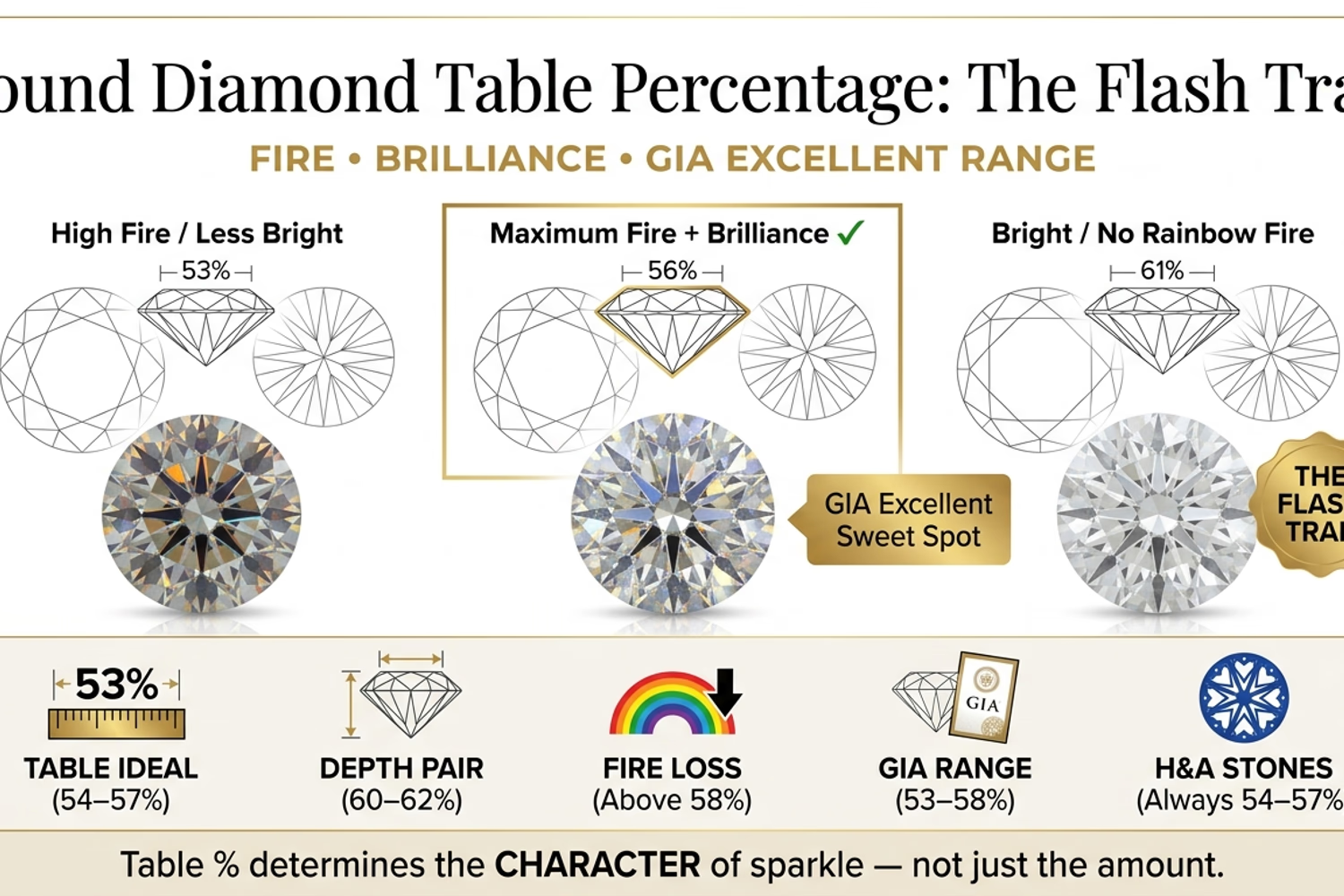
- Ideal table range: 54–57% for balanced fire and brilliance; GIA Excellent accepts 53–58%
- The Flash Trap: a table above 58% produces a brighter but flatter stone — more white sparkle, less colored fire (rainbow flashes)
- A table below 53% shifts the balance toward fire but reduces overall brightness — the stone can appear darker
- Table percentage interacts directly with depth: the ideal combination is table 54–57% + depth 59.5–62%
- Buyers who ignore table % after confirming GIA Excellent cut may still end up with a stone at 58–58.5% table — technically excellent, but trading fire for brilliance
- Real 1ct G-VS2 GIA Excellent stones start at $3,230 — always check table % on that stone's certificate before purchasing
Depth percentage gets most of the attention in diamond proportion discussions. Table percentage is the underappreciated partner that determines whether the light that enters your diamond comes back as brilliant white flashes (brilliance) or colored rainbow flashes (fire) — or whether you lose it altogether.
The Flash Trap happens when buyers pick a GIA Excellent stone, ignore the table percentage, and end up with a stone at 58–59% table — which is technically Excellent, produces strong brightness, but delivers noticeably less fire than a stone at 55–56% table. The ring is bright. The rainbow colors are gone. Many buyers wonder why their "excellent cut" stone looks like a disco ball rather than a traditional round brilliant.
What Is Table Percentage for a Round Diamond?
The table is the flat octagonal surface at the very top of a round brilliant — the largest facet on the stone, and the main window through which light enters and exits.
Table percentage formula: Table % = (Table diameter ÷ Average girdle diameter) × 100
For a 1ct round diamond measuring 6.40mm average diameter with a 3.55mm table: Table % = (3.55 ÷ 6.40) × 100 = 55.5%
This 55.5% table falls squarely in the ideal range and produces the balanced combination of fire and brilliance that characterizes the best round brilliants.
What Table Percentage Does GIA Excellent Allow?
GIA Excellent cut for round brilliants accepts table percentages from approximately 53% to 58%. The full range within Excellent is wider than most buyers expect:
| Table % | Assessment | Within GIA Excellent? |
|---|---|---|
| <52% | Very small table — darker, more fire | No |
| 52–53% | Small — higher fire, lower brilliance | Borderline Excellent |
| 53–57% | GIA Excellent optimal range | Yes — target |
| 54–57% | Ideal sub-range for fire + brilliance | Yes — best |
| 57–58% | Upper Excellent — bright, less fire | Yes |
| 58–59% | Borderline — may still be Excellent | Borderline |
| >59% | Outside Excellent territory | No |
The Flash Trap: What Too Large a Table Actually Costs You
The Flash Trap is the situation where a buyer buys GIA Excellent cut, gets a technically valid certificate, but receives a stone with a 58% table that has traded its fire for brightness.
Why Fire Decreases as Table Grows
Fire (dispersion) — the rainbow spectral flashes visible in a round brilliant — is produced primarily through the bezel facets and upper girdle facets, the angled crown facets that surround the table. When the table expands, these facets shrink. Smaller bezel facets = less dispersion = less fire.
A 56% table leaves substantial surface area for the bezel facets. A 58.5% table crowds them toward the girdle. The result is a stone that looks bright and white under overhead lighting — often described as "brilliant" — but shows fewer rainbow colors when you move it in natural light.
What changes visually at different table sizes:
| Table % | Brilliance (white sparkle) | Fire (rainbow flashes) | Overall impression |
|---|---|---|---|
| 53–54% | Medium | High | Fire-dominant; some dimness |
| 54–57% | High | High | Balanced — ideal |
| 57–58% | Very high | Medium | Bright but less colorful |
| 58–59% | Maximum | Low | "Disco ball" bright, few colors |
Real Example: Two GIA Excellent Stones at Different Tables
Both stones: 1ct G-VS2 GIA Excellent, identical color and clarity, both priced around $3,230–$3,400.
- Stone A: Table 55%, Depth 61.2% → Strong fire and brilliance, classic round brilliant appearance
- Stone B: Table 58%, Depth 61.0% → Strong brilliance, reduced fire — still beautiful but a different character
Neither is wrong. But buyers who value rainbow fire should specifically filter for table 54–57%.
Table Percentage and Depth: The Combination That Determines Everything
Table and depth must be evaluated together. A 55% table with 65% depth produces a completely different stone than 55% table with 61% depth. Each proportion affects the other's impact on light performance.
Optimal combinations within GIA Excellent:
| Table % | Depth % | Fire | Brilliance | Result |
|---|---|---|---|---|
| 53–54% | 60–61.5% | Very high | Medium | Maximum fire |
| 54–56% | 60–62% | High | High | Best balance |
| 55–57% | 61–62.3% | Medium–high | High | Bright, good fire |
| 57–58% | 61–62.3% | Medium | Very high | Bright, less fire |
| 58%+ | 61%+ | Low | Maximum | Flat brightness |
The sweet spot for most buyers is table 55–56% with depth 60–62% — this produces the round brilliant's signature combination of intense white sparkle and clearly visible rainbow fire.
This is why proportions matter even within GIA Excellent. Two stones with identical GIA Excellent grades can look meaningfully different face-up depending on where within the Excellent ranges their table and depth measurements fall.
See our round diamond depth percentage guide for the depth side of this equation.
How Table Percentage Appears on a GIA Certificate
The GIA certificate lists table percentage under "Additional Grading Information" as "Table: XX%." On Blue Nile:
- Open any diamond listing on Blue Nile round diamond search
- Click the stone
- Look for the "Cut Details" or proportion section showing Table %
- Confirm the table falls in 54–57% for ideal balance
Blue Nile's Ideal filter (GIA Excellent) allows 53–58% table. The filter does not narrow to 54–57%. You must check the specific stone.
Table Percentage Price Impact: Is There a Premium for Ideal Tables?
Surprisingly, no — at least not a systematic one. Blue Nile's pricing at 1ct for GIA Excellent does not assign a meaningful premium for 55% tables vs 58% tables within the same color and clarity.
Real 1ct G-VS2 GIA Excellent stones on Blue Nile:
| Price | Note |
|---|---|
| $3,230 | Check specific table — verify it's 54–57% before purchasing |
| $3,240 | Second option at nearly identical price |
| $3,370 | Third option — check table % in Cut Details |
| $3,490 | Fourth option |
| $3,490 | F-VS2 for comparison — slightly better color at same price |
Among these stones at similar prices, one may have table 55% and another table 57.5%. Both are GIA Excellent. But the 55% stone will show more fire. Since the price is nearly identical, always check and choose the lower table within the acceptable range.
This is free performance. You get a better-performing stone for the same price by spending 30 seconds checking table %.
Tides Of Summer Capsule
Up To 30% Off
Shop The Sale →Vault ClearanceClear The Vault
Up To 70% Off
Shop Vault Deals →Affiliate link — no extra cost to you
Table Percentage for Hearts and Arrows Diamonds
Hearts and Arrows diamonds — the top tier of GIA Excellent cut — consistently show table percentages in the 54–57% range. This is not coincidental: the precise optical symmetry required for hearts and arrows patterns at 0-degree rotation requires crown facet geometry that produces tables in this range.
If a stone claims to show hearts and arrows patterns at 54–60% table ranges, the patterns will only be visible at the lower end. True H&A stones cluster around 55–57% table.
See our hearts and arrows diamond guide for the full optical symmetry framework.
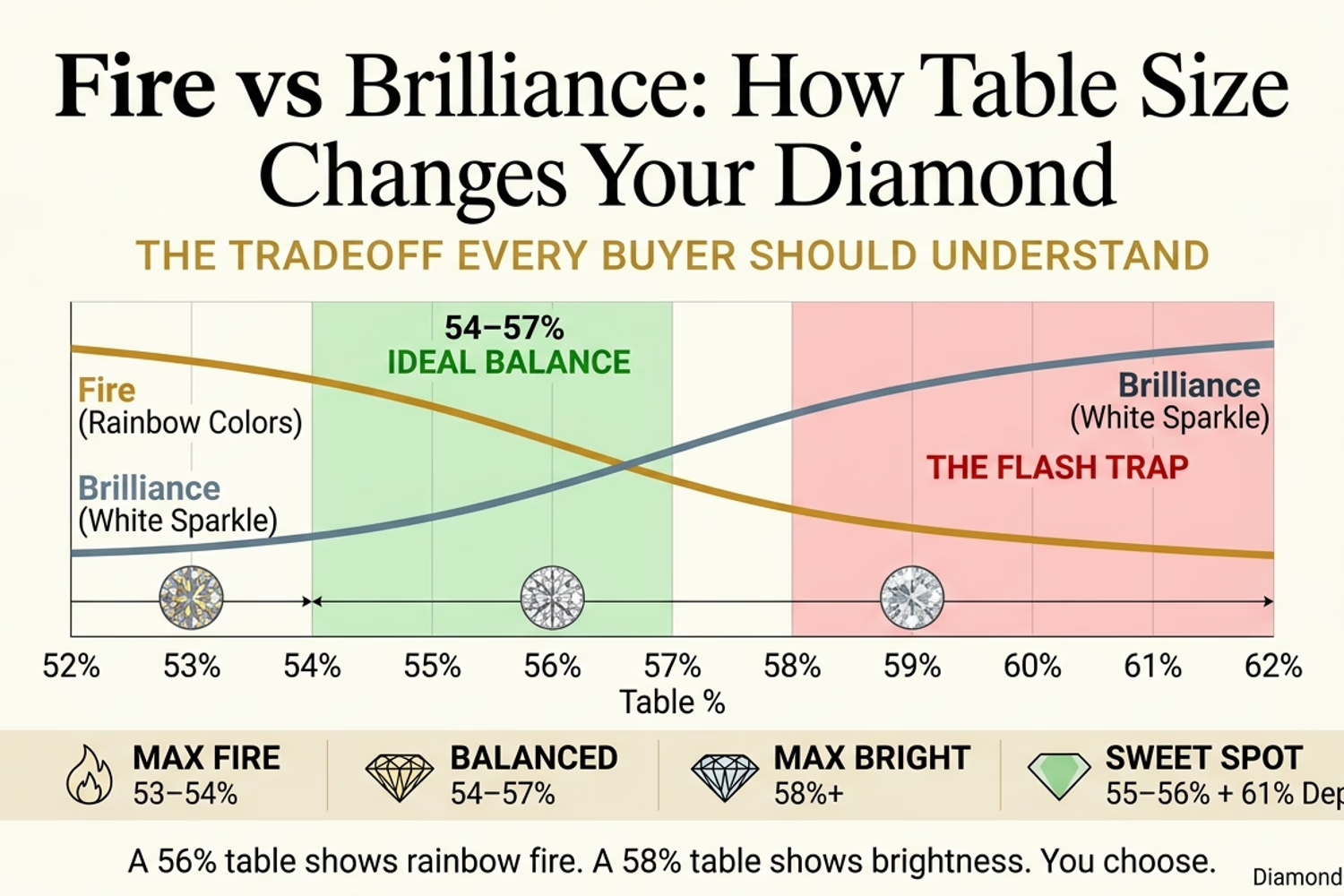
Shallow Tables vs Large Tables: The Two Failure Modes
Too Small (Below 53%): The Fire Trap
A table below 53% concentrates light entry through a tiny central window. This maximizes dispersion through the large bezel facets — fire is intense — but reduces overall brightness because there is simply less light entry. The stone can appear slightly dark face-up in lower-light conditions despite showing spectacular fire when a direct light source hits it.
This affects some "super-ideal" cut diamonds that push table percentages below 53% in pursuit of maximum fire. The trade-off is lower average brightness for higher peak fire.
Too Large (Above 58%): The Brightness Trap
A table above 58% maximizes light entry but shrinks the bezel facets that produce dispersion. The result is a stone that looks spectacularly bright under overhead lighting — many buyers find these stones impressive in showrooms — but shows minimal fire in natural or ambient light.
This is The Flash Trap in action. Showroom overhead lighting is designed to maximize brightness. Natural light, candlelight, and ambient indoor lighting reveal fire. A stone that looks incredible under halogen showroom lights but flat in your dining room has a table percentage problem.
Farzana's Verdict: Table percentage is the proportion that determines what kind of sparkle you get — not just how much. Buyers who filter for GIA Excellent cut and stop there have eliminated bad stones but haven't selected for the character of sparkle they actually want. A 56% table produces a stone with visible rainbow fire under natural light. A 58% table produces a stone that looks bright in photos and under overhead lighting but loses the colored sparkle that makes round brilliants distinctive. My recommendation: after filtering for GIA Excellent, check table % and reject anything above 57.5%. At 1ct G-VS2, this takes 30 seconds and costs nothing — multiple options at $3,230–$3,490 exist in any quality search. Choose the stone that performs better for the same price.
Frequently Asked Questions
What is the ideal table percentage for a round diamond?
The ideal table range is 54–57% for maximum fire and brilliance combined. GIA Excellent accepts 53–58%. Stones with table 55–56% consistently produce the strongest combination of white sparkle and rainbow fire.
Does table percentage affect diamond sparkle?
Yes, significantly. Table percentage determines the balance between fire (rainbow colors) and brilliance (white sparkle). Large tables (58%+) maximize brilliance but reduce fire. Smaller tables (53–56%) increase fire at some cost to overall brightness.
What is the difference between table and depth percentage?
Table % measures the width of the top flat facet as a percentage of the diamond's diameter. Depth % measures the total height of the diamond as a percentage of its diameter. Both work together to determine light performance — optimal proportions require both measurements in the correct range.
Is 57% table good for a round diamond?
Yes. 57% is within the GIA Excellent range and produces good light performance — strong brilliance with moderate fire. It is at the upper end of the ideal range; 54–56% shows more fire, but 57% is still an excellent choice.
Is 58% table too big for a round diamond?
58% is at the boundary of GIA Excellent. A stone at 58% table will have slightly less fire than one at 55–56%, though brilliance will be high. Within GIA Excellent at 58%, the stone is technically correct. If fire is important to you, target 54–57%.
What happens if a round diamond has too large a table?
A table above 58–59% reduces the bezel facets that produce fire (rainbow dispersion). The stone appears very bright and white — "brilliant" in the common sense — but lacks the colored sparkle that distinguishes a premium round brilliant. This is the Flash Trap.
Does table percentage affect diamond value?
Not directly in retail pricing — two GIA Excellent stones at 55% and 58% table, with identical color and clarity, will be similarly priced. But the performance difference is real. Checking table % and choosing the stone with better proportions at the same price gives you more diamond for the same money.
What table percentage do Hearts and Arrows diamonds have?
True Hearts and Arrows round diamonds consistently show table percentages between 54–57%. The precise geometric symmetry required for the H&A pattern at all rotation angles requires crown facets in this proportion range.
How do I find the table percentage of a diamond on Blue Nile?
On any Blue Nile diamond listing, look in the "Cut Details" or proportion section. Table % is listed explicitly, alongside depth %, girdle thickness, culet size, polish, and symmetry. All Blue Nile GIA Excellent stones show this data.
See Also
Expert Verdict
Always audit the stone individually — no grade replaces seeing the actual diamond. The certificate tells you what to look for. Your eyes tell you whether to buy.
— Farzana Hasan, GIA Expert · DiamondCritics.com